


Moonstone can make meditation feel calmer, more focused, and easier to stick with. In this article, I’d sum it up like this: it may help with emotional calm, intuition, self-reflection, dream recall, lunar rhythm, and daily ritual.
Here’s the short version of all 7 points:
- Calms emotions so I can sit with less mental noise
- Supports intuition when I want to listen inward
- Helps balance mood during stress or change
- Makes self-reflection easier after quiet sitting
- Pairs well with dream work and morning journaling
- Links meditation to moon phases like the New Moon and Full Moon
- Adds structure to ritual so practice feels more steady
One practical detail stands out: most sessions in the article use moonstone for just 10 to 15 minutes. There’s also a repeated focus on simple placement, like the heart, third eye, or in the hand, plus one short intention word such as “Stillness” or “Serenity.”
Moonstone Meditation 852 Hz
sbb-itb-cb05739
Quick Comparison
| Way moonstone is used | Main focus | Simple method |
|---|---|---|
| Emotional calm | Settling stress and strong feelings | Hold it in the palm |
| Intuition | Inner guidance and quiet knowing | Place near the third eye |
| Emotional balance | Staying centered in change | Use at the heart |
| Self-reflection | Looking inward after meditation | Sit quietly, then journal |
| Dream work | Remembering symbols and themes | Use in evening practice |
| Natural cycles | Working with moon phases | Keep it on an altar |
| Ritual | Building a steady habit | Start each session with one intention |
If I were putting the whole article into one sentence, it would be this: moonstone works best as a simple meditation anchor that helps me slow down, pay attention, and return to practice with more purpose.
Why Moonstone and Meditation Go Hand in Hand
Moonstone and meditation fit together with the same core traits: stillness, receptivity, and inward focus. In crystal healing circles, moonstone is believed to help meditative practice by softening mental noise, which can make subtle inner signals easier to notice.
Moonstone is also tied to the moon’s cycle of intention, growth, and release. You can see that same reflective pattern in meditation, where attention moves away from analysis and toward awareness.
It’s also used to support emotional flow during meditation. That makes it a natural match for the open, receptive state the practice calls for.
In day-to-day practice, meditators tend to use moonstone in a few simple ways:
- Hold a palm stone during seated meditation
- Place it over the heart for emotional centering
- Set it near the third eye for intuitive clarity
1. Encourages Emotional Calm
Moonstone is often used to ease emotional turbulence and bring a more balanced state of mind to meditation. Instead of trying to shove hard feelings away, it supports a softer approach: notice them, let them settle, and stay present with what comes up. When the mind grows quieter, it also becomes easier to pick up on subtler inner signals.
A simple way to begin is to hold a moonstone palm stone at the start of meditation and use it as a steady point for your attention. That small physical cue can help keep your mind from drifting.
You can also choose one anchor word, such as Serenity or Stillness. Repeat it silently as you breathe and let it bring you back when your thoughts wander.
The New Moon fits this practice well because it supports quiet reflection, making it an ideal time for new moon rituals. In that calmer state, turning inward can feel a bit clearer and less forced.
2. Strengthens Intuition and Inner Guidance
When the mind settles down, it gets easier to notice the quieter signals underneath the mental noise. Moonstone is often tied to the Crown Chakra, which is linked with higher awareness and spiritual insight. That connection can create more room for intuitive knowing.
A simple way to work with it is to hold a moonstone in your palm while you sit in stillness, or place it on a small altar. Both options help turn your attention inward. And when your attention turns inward, subtle insights can be easier to catch.
The New Moon is often seen as a good time for intuitive focus and setting intentions. If you use mantra practice, a moonstone mala with 108 beads can help you stay focused during recitation. That steadier focus can also help with emotional work.
3. Supports Emotional Balance
Moonstone can help steady emotions during meditation, especially during times of change. It gently pulls your attention away from future-focused worry and brings you back to the present. That can support emotional steadiness and leave more room for subtler inner guidance.
This is part of why moonstone can be so helpful during major life changes and other tender periods of growth. Try using moonstone at the start of meditation to help yourself settle and set an intention. Holding it in your non-dominant hand while saying a short intention can help you drop in faster. And when your emotions feel more settled, it often becomes easier to turn inward and notice what’s happening beneath the surface.
For placement, an even altar layout can reinforce the sense of balance you want to build.
That quiet pause also opens the door to deeper self-inquiry. From there, the practice can move more naturally into deeper self-reflection.
4. Deepens Self-Reflection
Once your emotions feel more steady, meditation can do more than calm the mind. It can help you look at what’s going on underneath the surface. Moonstone may soften mental chatter enough to make honest self-inquiry feel easier. This is especially helpful for empaths who often absorb external noise.
When you keep your attention turned inward during sitting, you give yourself more room to notice what’s there. That quieter state can lead to spiritual growth. Then, journaling right after meditation helps catch those insights before they slip away.
For placement, rest moonstone on the Crown Chakra or at the center of your forehead during silent sitting.
To record what comes up, try intuitive journaling right after silent sitting. Start with 5–10 minutes of silence or breath-focused meditation, then shift into free writing. Prompts like What do I already know? or What would I choose if I trusted myself? can help bring up what the quiet mind is ready to show you. In that way, moonstone can work as a practical bridge from silence to insight.
5. Aids Dream Work and Insight Integration
When meditation opens the door to insight, moonstone can help you bring that clarity into your dreams and your day-to-day reflection. People often use it to support dream recall and inner reflection, which can make it easier to notice and hold onto what comes up during quieter states.
Try using it during evening meditation or a New Moon session to deepen your inward focus. If you want a more focused practice, place the stone at the Third Eye to support intuitive clarity with crystals.
When you wake up, write down any symbols, images, or phrases right away before they fade.
6. Connects You to Natural Cycles
Moonstone has long been tied to the moon’s rhythm, which makes it a fitting companion for meditation centered on release, intention, and renewal.
The New Moon is often seen as a strong window for inward meditation and deepening intuition. Then, as the moon moves into the Waxing Moon phase, moonstone can help support a calm, receptive state while energy starts to build.
One simple way to work with this is to place moonstone on a dedicated altar and reset its intention each time the lunar phase changes. That small habit can make your practice feel steadier and easier to return to day after day.
A simple phase-based structure can help keep your meditation practice on track:
| Lunar Phase | Energetic Focus | Suggested Use |
|---|---|---|
| New Moon | Reflection and setting new intentions | Inward rituals and releasing old patterns |
| Waxing Moon | growth, mental clarity and vitality | Support a calm, receptive state as energy builds |
| Full Moon | Activity and bringing emotions to the surface | Use for observation, release, and review |
7. Builds a More Intentional Meditation Ritual
After insight and reflection, moonstone can also give your meditation practice a repeatable shape. It helps turn meditation from something occasional into something you can come back to with more purpose.
Before each session, cleanse your moonstone with moonlight or smoke. Then place it on a dedicated altar or tray you use only for meditation. That small setup makes the ritual easier to return to day after day.
Start each session with one word, such as "Stillness" or "Fluidity," and let moonstone hold that intention as you begin. When you're done, keep a journal close by and write down any impressions or symbols that came up. Even one short note is enough.
That simple sequence creates a repeatable meditation rhythm. And once that rhythm is in place, it becomes easier to bring moonstone into your daily practice.
How to Use Moonstone During Meditation
Moonstone works well as a simple anchor for meditation. Before you begin, hold the stone and choose one clear intention, such as serenity, focus, or stillness.
Once you're seated, place the stone based on what you want from the session. The idea is simple: let the placement support the kind of attention you're trying to bring in.
| Session Goal | Placement | Best Use |
|---|---|---|
| Insight | Third eye (forehead) | Third Eye Chakra |
| Emotional balance | Heart / chest | Heart center |
| Crown focus | Top of head or in hand | Crystals for the Crown Chakra |
| Focus & mantra counting | In hand | Grounding/focus |
| Intention setting | Altar / beside cushion | Sacred space |
Sit with the stone for 10 to 15 minutes. If your mind starts to wander, bring your attention back to the stone's coolness, weight, or texture.
Moonstone Meditation Benefits at a Glance
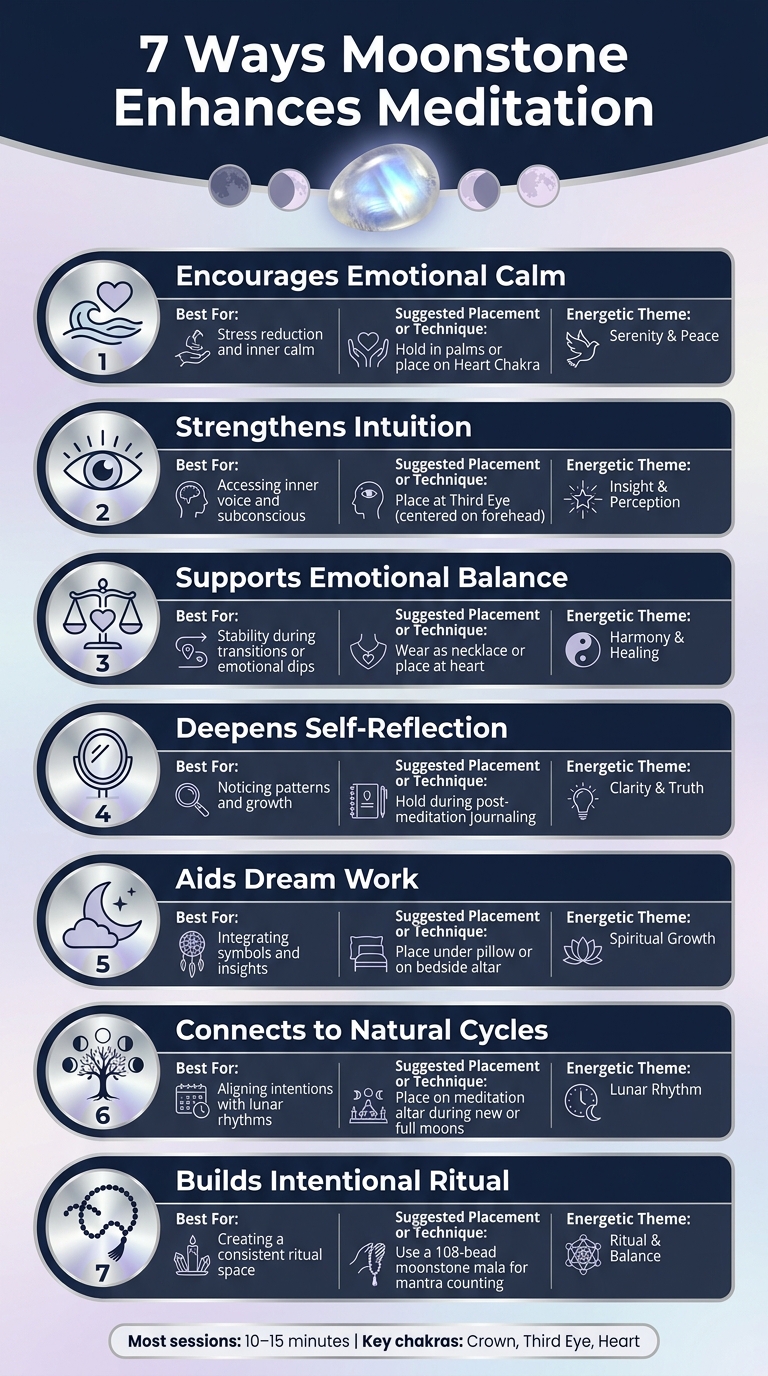
7 Ways Moonstone Enhances Meditation: Benefits, Placements & Themes
Here’s a quick snapshot of the seven benefits and how to use them. If you have a meditation goal in mind, this chart makes it easy to pair moonstone with that focus.
| Benefit | Best For | Suggested Placement or Technique | Energetic Theme |
|---|---|---|---|
| 1. Encourages Emotional Calm | Stress reduction and inner calm | Hold it in your palms or place it on the Heart Chakra | Serenity & Peace |
| 2. Strengthens Intuition | Accessing the inner voice and subconscious | Place it at the Third Eye, centered on the forehead | Insight & Perception |
| 3. Supports Emotional Balance | Stability during transitions or emotional dips | Wear it as a necklace or place it at the heart | Harmony & Healing |
| 4. Deepens Self-Reflection | Noticing patterns and growth | Hold it during a post-meditation journaling session | Clarity & Truth |
| 5. Aids Dream Work | Integrating symbols and insights | Place it under the pillow or on a bedside altar | Spiritual Growth |
| 6. Connects to Natural Cycles | Aligning intentions with lunar rhythms | Place it on a meditation altar during new or full moons | Lunar Rhythm |
| 7. Builds Intentional Ritual | Creating a consistent ritual space | Use a 108-bead moonstone mala for mantra counting | Ritual & Balance |
Moonstone jewelry is most often tied to the Crown Chakra, and it also has strong links to the Third Eye and Heart. In practice, that means people often use it for spiritual focus, inner sight, and emotional steadiness.
| Chakra | Meditation Intention | Moonstone Support |
|---|---|---|
| Crown (Sahasrara) | Spiritual Connection | Promotes spiritual well-being and higher states of consciousness |
| Third Eye (Ajna) | Insight & Perception | Activates the channel for non-ordinary knowing and clarity |
| Heart (Anahata) | Emotional Steadiness | Promotes self-love, emotional healing, and a sense of peace |
Conclusion
Taken together, these benefits make moonstone a simple way to bring calm, insight, and steadiness into meditation. It fits naturally into the practice because it supports calm, reflection, and intuition. And those seven benefits don’t sit in separate boxes. They build on each other: pink crystals for emotional balance opens the door to deeper reflection, sharper intuition can support dream insight, and intentional ritual helps turn all of it into a practice you’ll want to come back to.
Choose the method that feels most steady and natural. The best meditation practice is the one you return to with intention, and moonstone can make that return feel a little easier.
FAQs
How do I choose the best moonstone placement for meditation?
Choose the placement based on your meditation goal, and trust your instinct.
- For general focus or altar work, use a balanced arrangement.
- For deep focus or structured mindfulness, vertical placement can help anchor your attention.
- For nighttime or sleep-related practices, place it on a nightstand or hold it against your sternum while lying down.
Can beginners use moonstone without following moon phases?
Yes. Beginners can use moonstone for meditation without following moon phases.
Some people like to line up crystal work with the lunar cycle. That’s one approach, but it’s not a rule. Your practice can be shaped by what you need and what feels right in the moment.
You can use moonstone whenever you want, whether your goal is serenity or emotional balance.
How often should I cleanse moonstone for meditation?
A monthly cleansing ritual helps keep your moonstone ready for meditation. If you want extra lunar support, do it two days before the full moon.
Place the stone in a ceramic bowl with purified water and sea salt. Then leave it under the open sky until sunrise.
