


Yes, you can use rainwater to cleanse some crystals - but only if the stone is water-safe, the rainwater is clean, and contact stays short. If you skip those checks, you can damage the crystal, fade color, loosen jewelry parts, or bring dirt and roof runoff into the ritual.
Here’s the short version:
- Use rain that falls straight into a clean container
- Do not use roof or gutter runoff
- Keep water contact brief
- Dry the crystal at once
- Keep soft, dyed, glued, plated, or soluble pieces dry
A few crystals usually handle brief rain contact well, such as Clear Quartz, Amethyst, Rose Quartz, and Citrine. Others, like Selenite and Desert Rose, should not get wet at all. And if you’re cleansing jewelry, it’s not just the stone that matters - metal, elastic, glue, and plating can all be harmed by water.
What this guide covers:
- The difference between physical cleaning and energetic cleansing
- Which crystals can get wet and which should stay dry
- How to collect and store rainwater safely
- A simple 3-step rainwater cleansing ritual
- How to protect jewelry settings, cords, and metal parts
One useful rule: crystals around Mohs 6 or higher often do better with short rain exposure, but hardness alone is not enough. Tiny cracks, porosity, dye, and surface treatments matter too.
This gives me a simple way to think about it: check the stone first, check the water second, then keep the ritual short and dry everything well.
Which Crystals Can Safely Get Wet
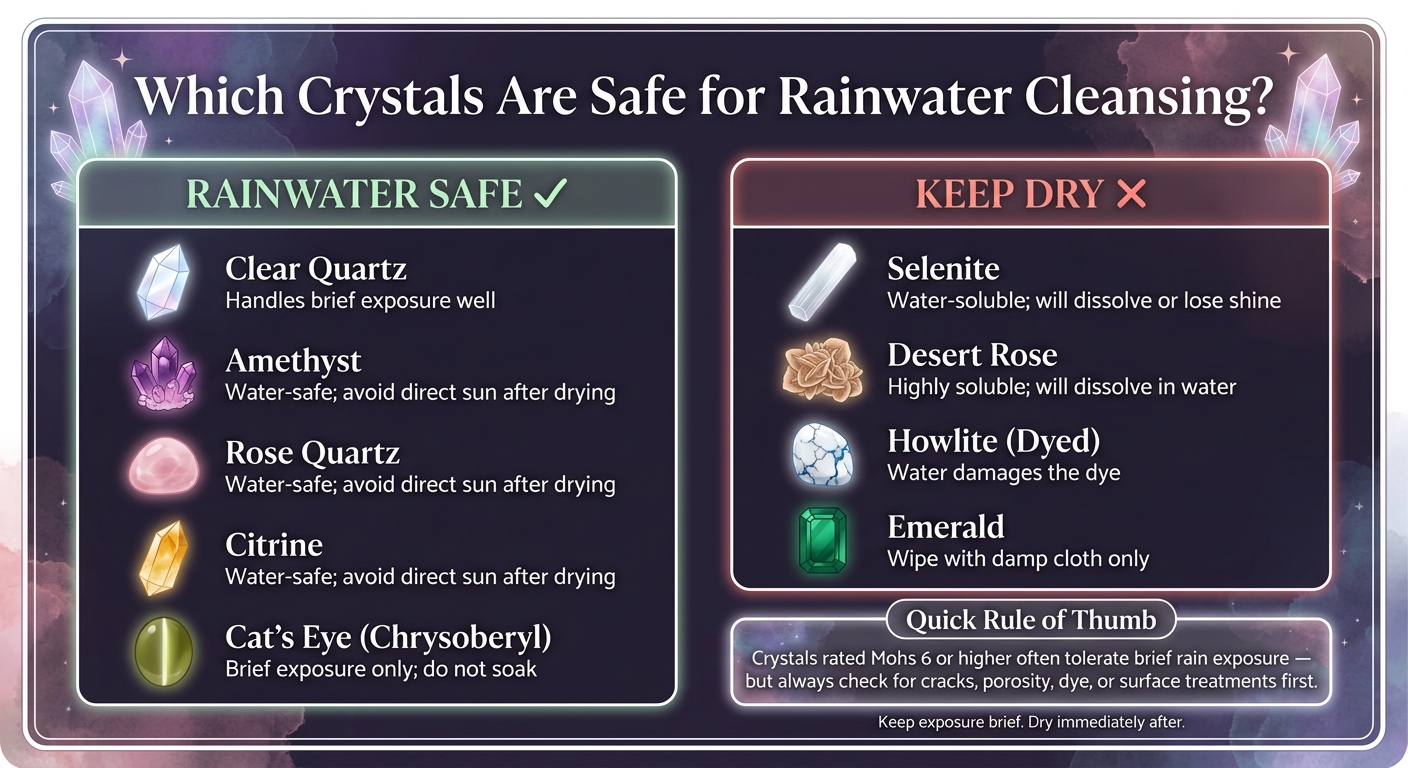
Which Crystals Are Safe for Rainwater Cleansing?
Not every crystal should go in rainwater. Water can damage, dissolve, crack, or discolor some stones, and Mohs hardness on its own doesn't tell the whole story. Porosity, mineral makeup, tiny fractures, and surface treatments all play a part in whether a crystal can handle water safely. So start with the stone, then choose the ritual. If it's water-safe, move on. If it's fragile, keep it dry.
Using Mohs hardness as a quick guide
The Mohs scale measures scratch resistance from 1 to 10. As a quick shortcut, crystals rated Mohs 6 or higher usually do better with brief rain exposure.
But that shortcut has limits. Hardness doesn't account for porosity, and porous stones can break down over time when they get wet. It also won't warn you about small cracks or fractures, where water can slip in and weaken the crystal as it dries. And if a stone has dye, treatments, or glued settings, water may damage the finish or loosen the setting.
Crystals that handle brief rain exposure well
Clear Quartz, Amethyst, Rose Quartz, and Citrine are generally seen as water-safe for brief rain exposure. Cat's Eye (Chrysoberyl) is sturdy as well, but only for short contact with rain. Don't soak it, especially if it already has tiny fractures.
| Crystal | Rainwater Safety | Notes |
|---|---|---|
| Clear Quartz | Safe | Handles brief exposure well |
| Amethyst | Safe | Water-safe |
| Rose Quartz | Safe | Water-safe |
| Citrine | Safe | Water-safe |
| Cat's Eye (Chrysoberyl) | Brief Only | Brief exposure only; do not soak |
One more thing: keep Amethyst, Rose Quartz, and Citrine out of direct sun after drying to help reduce fading.
With the safer options set aside, it's easier to spot the stones that should not get wet at all.
Crystals to keep away from rainwater
Some crystals need to stay dry. Selenite is water-soluble and can dissolve or lose its shine. Desert Rose is also highly soluble and should not be exposed to water. Dyed Howlite is best kept away from water because moisture can damage the dye. Emerald is delicate enough that wiping it with a damp cloth is preferred over washing.
| Crystal | Rainwater Safety | Notes |
|---|---|---|
| Selenite | Avoid | Water-soluble; will dissolve or lose shine |
| Desert Rose | Avoid | Highly soluble; will dissolve in water |
| Howlite (Dyed) | Avoid | Water can damage the dye |
| Emerald | Caution | Wipe with a damp cloth instead of washing |
If you're not sure about a stone, play it safe and keep it dry, or consult a guide on crystals for beginners. Next, collect clean rainwater for the ritual.
sbb-itb-cb05739
How to Collect and Store Rainwater
Once you have a water-safe crystal, collect only rain that falls straight into a clean container. Don’t gather water that first runs over a roof, awning, or any other surface. Rooftops and gutters can pile up contaminants like bird droppings, shingle granules, and heavy metals such as lead and zinc that leach from roofing materials.
Set up a clean container to catch rain
Set a glass jar or food-grade container outside in a yard, patio, or balcony where rain can fall right into it. If you need more water, a clean plastic trash can works too. Use an inverted lid and a mesh screen to help keep out bugs and debris.
How to spot and avoid poor-quality rainwater
Give the water a quick check before you use it. Use only water that is clear, odorless, and free of visible particles. Throw it out if you notice any of these signs:
- An oily film on the surface
- A cloudy or gray-brown tint
- A musty or sulfurous smell
- Mosquito larvae
How long you can store collected rainwater
It’s best to use rainwater the same day you collect it. If you need to store it, pour it into a sealed, food-grade container and refrigerate it at 35°F–40°F to slow bacterial and algae growth. Opaque containers work better than clear ones because sunlight can encourage algae growth. Before use, let refrigerated water come back to room temperature.
Once the water is ready, begin the cleansing ritual. Afterward, you may want to charge your crystals to restore their natural energy.
Step-by-Step Rainwater Crystal Cleansing Ritual
With the water ready and the stone confirmed safe for brief contact, move through three simple steps: intention, short exposure, and drying.
Step 1: Set your intention before you begin
Hold the crystal in both hands, breathe slowly, and choose one clear intention before it touches water.
Keep it simple. You might focus on release, renewal, or focus. Then picture that intention settling into the stone.
Once that feels set, bring the crystal to the water.
Step 2: Expose water-safe crystals to rain or collected rainwater
Hold the stone under light rainfall or place it briefly in a clean bowl of collected rainwater. Keep the contact short, and picture what you want to let go of being washed away with the stagnant energy.
When the cleansing feels done, dry the crystal right away.
Step 3: Dry, inspect, and recharge the crystal
Pat the stone dry at once with a soft, lint-free cloth. Skip heat. Fast temperature shifts can put stress on the stone.
Then inspect it for dullness, texture changes, or new damage, especially around fractures or inclusions.
Finish by placing the crystal in moonlight or using another charging method you like.
Caring for Crystal Jewelry and Key Takeaways
Protect metal, elastic, and plated parts on jewelry
If you're cleansing jewelry or crystal decor, the same rainwater rules still apply. But the extra materials attached to the crystal need more care.
Crystal jewelry often includes metal, elastic, bails, and plated finishes. That means you should let only the gemstone touch rainwater, and only for a short time. If the piece stays wet too long, metal parts can tarnish, elastic cords can weaken, and adhesive settings can loosen.
Afterward, dry clasps, chains, and bead holes right away with a soft, non-abrasive cloth. Be extra careful around tight spots, like the setting and any drill holes in beads, since water tends to sit there the longest.
Loose stones vs. jewelry: what can get wet
Use this quick guide to match each item with the safest rainwater method.
| Item Type | Rainwater Contact | Parts to Protect | Drying Notes |
|---|---|---|---|
| Loose Tumbled Stones | Brief rain contact only, for water-safe stones | None | Air dry or pat dry with a soft cloth |
| Bead Bracelets | Brief surface contact only | Elastic cord, metal spacers | Pat dry immediately; elastic weakens when wet repeatedly |
| Pendants/Necklaces | Gemstone surface only | Metal bail, chain, plating, adhesives | Dry the bail, chain, and drill holes completely |
| Crystal Home Accents | Wipe only the crystal surfaces; keep bases, frames, and adhesive dry | Bases, frames, felt, and glue | Wipe dry right away to prevent warping or oxidation |
If you own a Conscious Items home accessory - like a healing crystal lamps or a crystal set with a decorative base - wipe only the crystal parts with a slightly damp cloth instead of putting the whole piece out in the rain.
Conclusion: Key steps for a safe rainwater cleansing ritual
Once the piece is dry and checked, the cleanse is complete.
A safe rainwater cleanse comes down to five steps:
- Confirm the stone is water-safe
- Use clean rainwater
- Keep exposure brief
- Dry everything fully
- Protect jewelry settings
When you're done, store cleaned jewelry in a dry, velvet-lined pouch or box after it's fully dry. That helps protect both the stone and its setting.
FAQs
Can moonwater be used instead of fresh rainwater?
Yes, moon water is a great stand-in for rainwater when you want to cleanse crystals. Many people see it as a safe, effective way to refresh their stones, especially because moonlight has a gentle, restorative feel.
Before you submerge any crystal, double-check that it’s water-safe. Soft or porous stones like selenite, malachite, and calcite can be damaged by water exposure.
What if I’m not sure whether my crystal is water-safe?
If you’re not sure, skip water. It can damage some stones by making them dissolve, crumble, or rust. A good rule of thumb is to check the stone’s Mohs hardness. Crystals rated 5 or lower are often more likely to react badly to water.
A safer move is to use gentler cleansing methods instead, like moonlight or sound cleansing.
How often should I cleanse crystals with rainwater?
There’s no fixed schedule. A simple rule of thumb is to go by use:
- Wearable crystals: about once a week
- Pocket stones: every 1 to 2 weeks
- Meditation or healing stones: after each session
- Display pieces: about once a month
It also helps to trust your instinct. If a crystal feels heavy, warm, or dull, it may be time to cleanse it, even if you cleaned it not long ago.
