


Crystal grids are used to support calm, focus, prayer, and rest - but they are not medical care. I’d sum it up like this: people use grids to give an intention a clear place in the home, often with 1 center stone, a geometric layout, and a set purpose such as sleep, protection, or clarity.
Here’s the short version:
- What they are: crystals placed in a pattern on a flat surface
- How people use them: for meditation, journaling, prayer, and quiet time
- What people say they help with: a calmer mood, stronger focus, and a deeper sense of spiritual connection
- Common setups: room-corner, altar, under-bed, and whole-home grids
- Common stones: Clear Quartz, Amethyst, Rose Quartz, Black Tourmaline, Selenite, and Lapis Lazuli
- What matters most: the intention, the placement, and using the grid often
- Important note: reported effects are personal and belief-based, not guaranteed
A few patterns stand out. Altar grids are often tied to prayer and reflection. Under-bed grids are often linked with comfort and sleep. Room-corner grids are often used for grounding and boundary-setting. And whole-home grids are used when someone wants a more even feel across the space.
Quick Comparison
| Grid Type | Usual Spot | Main Use |
|---|---|---|
| Room-Corner Grid | Corners, entryways | Grounding, boundary support |
| Altar Grid | Shelf or table | Prayer, reflection, intention |
| Under-Bed Grid | Beneath bed frame | Comfort, rest, sleep |
| Whole-Home Grid | Across several rooms | Balance and clearing feel |
The core idea is simple: I see crystal grids as a ritual tool that helps turn a room into a place with meaning. For those just starting out, a healing crystal starter kit can provide the essential stones needed to begin building these grids. For many people, that shift in atmosphere is the main draw.
sbb-itb-cb05739
How Crystal Energy Grids Are Believed to Work
Practitioners see crystal grids as a mix of stone choice, sacred geometry, and intention. Put simply, the grid is set up to give a goal a clear shape. The geometry creates the framework, and the crystals serve as points that hold attention on that purpose.
Most grids begin with one main stone in the center.
The Role of Intention, Geometry, and a Center Stone
Every grid starts with a center stone, sometimes called an anchor. It goes down first and sets the focus for a specific goal. From there, supporting stones are placed around it in patterns such as circles, hexagons, or mandalas.
After the layout is in place, many practitioners move to activation. A common method is to trace a wand, crystal point, or even a finger from the center outward while saying the intention aloud.
Why People Associate Grids With Balance and Clarity
From a spiritual point of view, practitioners believe the geometric pattern helps arrange the grid's energy. The repeated setup can also work like a cue for mindfulness and concentration. For many people, that makes it easier to settle into meditation with crystals.
That feeling of order is a big reason crystal grids are linked with calm and clarity.
Healing Benefits People Commonly Report From Crystal Energy Grids
People often say crystal energy grids make a space feel calmer, help them stay focused, and deepen prayer or meditation. These are personal spiritual experiences, not promised results. In practice, what people report usually comes back to atmosphere, attention, and the meaning they bring to the ritual.
Creating a Calmer Emotional Atmosphere
For many people, the first thing that shifts is the mood of the room. That's a big reason grids are set up in the first place: to make a space feel different.
Bedrooms and reading nooks are common choices, especially during busy or overstimulating times. A grid built with Rose Quartz or Amethyst is often linked with a gentler, more supportive feel.
Used again and again, a grid can turn a room into a cue for calm.
Supporting Focus, Intention, and Spiritual Connection
A grid you can see each day can keep one intention in front of you, almost like a quiet reminder on the wall or table. People who practice with grids also say they feel more open during prayer and meditation when sitting near an active setup.
Grid Types and Their Common Sacred-Space Uses: A Comparison
Where you place a grid shapes how people use it. Here's a simple look at common placements and the benefits people tend to connect with each type:
| Grid Type | Common Placement | Associated Benefits |
|---|---|---|
| Room-Corner Grid | Entryways or room perimeters | Sense of protection, grounding, and security |
| Altar Grid | Dedicated shelf or tabletop | Spiritual connection, focused intention, deep reflection |
| Under-Bed Grid | Beneath the bed frame | Emotional comfort, soothing atmosphere, restful sleep |
| Whole-Home Grid | Central living area or across multiple rooms | Energetic cleansing, harmony, and overall household balance |
Types of Crystal Grids Used in Sacred Spaces
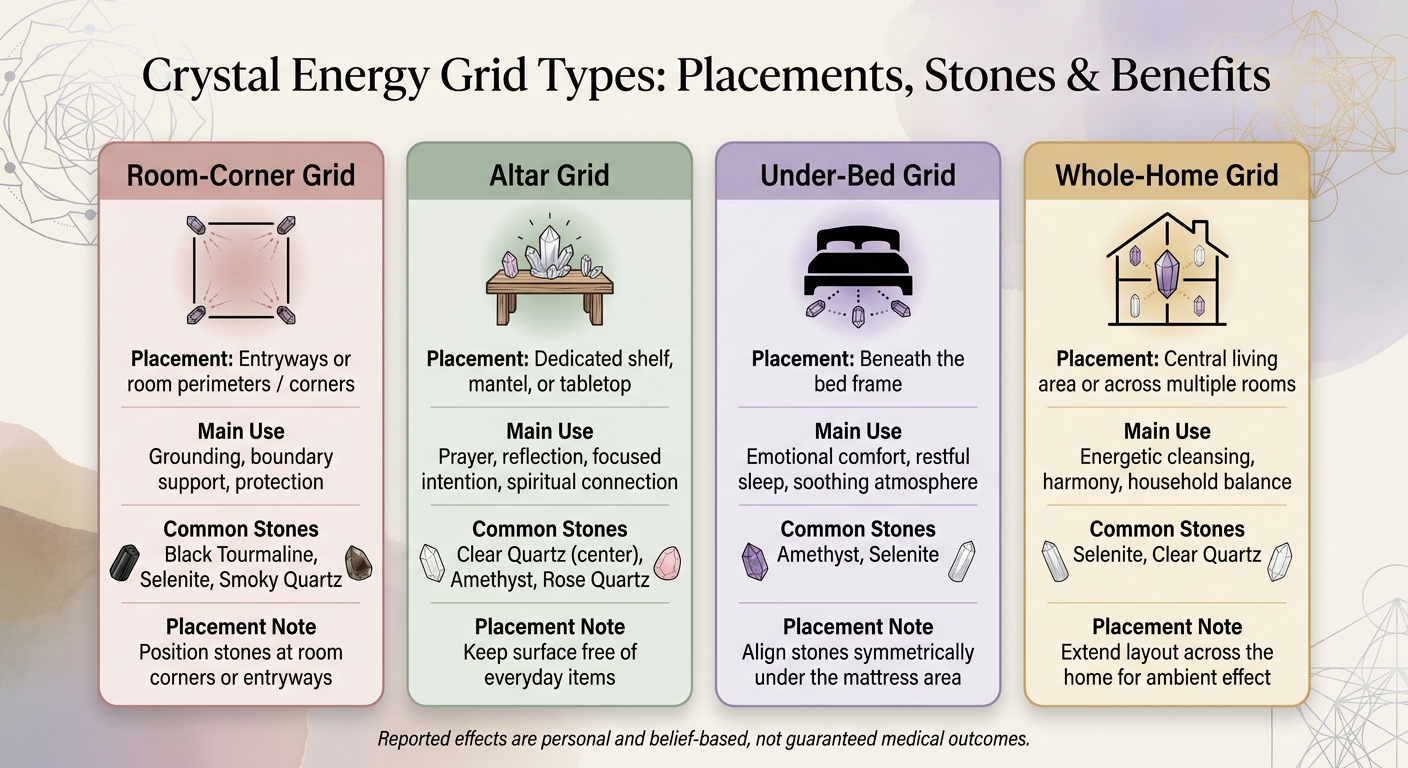
Crystal Energy Grid Types: Placements, Stones & Benefits
The type of grid you use - and where you place it - changes what it does in a space. Some grids work across an entire room. Others create a more focused area for ritual or rest.
The biggest difference comes down to scope. Some setups support the feel of a whole room, while others center attention in one spot. Placement matters too. A grid can act like a boundary, a focal point, or even a cue for sleep.
Room-Corner and Whole-Home Grids
Room-corner grids are used to define a larger area and support a steadier feel. Selenite is a common pick for these layouts because practitioners believe it helps clear stagnant energy. Black Tourmaline and Smoky Quartz are often placed in entryways or corners when the goal is to reinforce boundaries and grounding.
A whole-home grid takes this idea further by extending the layout across the home for a more even, ambient feel.
Altar, Meditation, and Under-Bed Grids
An altar grid is more focused. It sits on a dedicated surface, such as a shelf, mantel, or small table, and serves as a focal point for prayer or reflection. Many practitioners keep that surface free of everyday items like books or electronics so the altar stays separate from normal household activity.
Meditation grids often use symmetrical layouts like Flower of Life or Metatron's Cube. People use them to settle the mind, focus attention, and support meditation. Clear Quartz is often placed at the center, with Amethyst added for depth and Rose Quartz for a softer, more harmonious feel.
Under-bed grids sit beneath the bed frame and are used to support a restful atmosphere. Amethyst and Selenite are common choices for this type of layout.
After choosing the layout, the next step is selecting crystals that match the intention.
Choosing Crystals for a Grid and Starting the Practice at Home
Once you've picked the grid layout, the next step is pairing crystals with the space's intention. After the layout and placement are set, match the stones to the room's purpose and the feeling you want the space to hold.
Common Crystals Used in Sacred-Space Grids
Start small. One center stone and a few supporting stones are plenty.
Lapis Lazuli fits well in a study or home office, where it's often linked to truth and mental clarity. For a bedroom centered on rest, Amethyst or Rose Quartz are common picks. The main idea is simple: choose stones that fit the room's function and your intention.
Crystal Meanings and Placement Notes: A Comparison
Use these associations as guides, not rules.
| Crystal | Traditional Association | Common Sacred-Space Use | Placement Note |
|---|---|---|---|
| Clear Quartz | Amplification & Clarity | Universal grid anchor | Altar center |
| Amethyst | Calm & Spiritual Focus | Meditation and sleep support | Bedside shelf or meditation area |
| Rose Quartz | Compassion & Harmony | Softening shared spaces | Family room or dining area |
| Black Tourmaline | Grounding & Protection | Establishing boundaries | Room corners or entryways |
| Selenite | Cleansing & Clarity | Clearing stagnant energy | Windowsills or altar edges |
| Lapis Lazuli | Truth & Wisdom | Supporting focus and study | Desk or home office |
Keep Amethyst out of direct sunlight; prolonged exposure can fade its color.
After choosing the stones, place them around the center stone and activate the grid with your intention.
Key Points to Remember When Using Crystal Energy Grids
Crystal grids are intention-based spiritual tools. Their role is to support atmosphere, mindfulness, and personal meaning, not to promise any set result. Any effects people talk about are personal and belief-based, shaped by steady practice and the clarity of the intention behind the grid.
Picking crystals that feel personally meaningful matters just as much as following any old guideline.
FAQs
How do I activate a crystal grid?
Start by getting clear on your intention as you place the stones in a balanced, geometric pattern. Then use your finger or a clear quartz wand to trace lines from the center stone to the crystals around it.
As you make those connections, picture golden light moving between the stones and say your intention out loud. You can also charge the grid with meditation, visualization, sound, prayer, moonlight, or sunlight.
How many crystals do I need?
There’s no fixed number here. It depends on the grid pattern you want to use.
If you’re just starting out, keep it simple: try a triangle with three clear quartz crystals and one center “master” stone.
A Flower of Life layout uses seven crystals total:
- one in the center
- six placed around it
Some sacred-space setups can also work with just one crystal.
Where should I place a crystal grid?
Place your crystal grid in a steady spot where it won’t get knocked out of place, like a bookshelf, bedside table, or the corner of a mantel. A clean area with natural light usually works best.
You can also set it near your meditation space or anywhere you spend a lot of time. Some practitioners like the south or west areas of a home, but in the end, go with what feels right to you.
