


If you want a simple place to start, I’d match the stone to the kind of stress you feel most: amethyst for racing thoughts, lepidolite for overwhelm, rose quartz for self-kindness, smoky quartz or black tourmaline for grounding, blue lace agate for tense talks, moonstone for mood shifts, and selenite for a calmer room.
Anxiety affects more than 40 million U.S. adults, so it makes sense that many people want small, daily tools that feel easy to use. In this guide, I’d use stones as grounding aids, not mental health treatment. You can wear one, keep one in your pocket, place one by your bed, or hold one during breathing work.
Here’s the full list covered in the article:
- Amethyst - calmer thoughts, sleep wind-down
- Lepidolite - emotional steadiness, overwhelm
- Rose quartz - comfort, self-compassion
- Smoky quartz - grounding, feeling less scattered
- Blue lace agate - meetings, hard conversations, social nerves
- Moonstone - balance during change
- Black tourmaline - grounding in busy spaces
- Selenite - clearing mental or room clutter
Quick Comparison
| Stone | Best for | Simple way to use it |
|---|---|---|
| Amethyst | Racing thoughts, bedtime stress | Keep it on a nightstand or hold it before sleep |
| Lepidolite | Overwhelm, emotional strain | Carry it in a pocket during busy days |
| Rose Quartz | Comfort, self-kindness | Wear it or hold it over your chest |
| Smoky Quartz | Feeling scattered | Keep it on a desk or in a bag |
| Blue Lace Agate | Speaking stress | Wear it near the throat or keep it nearby during calls |
| Moonstone | Mood changes, life shifts | Use it during quiet time at night |
| Black Tourmaline | Busy, overstimulating places | Place it near a workspace or entryway |
| Selenite | Clearing a room or mind | Set it in a bedroom or meditation space |
The main point: pick one stone based on your current need, use it often, and keep expectations simple. If you have an anxiety disorder or another mental health condition, I’d treat stones as a small support tool alongside care from a licensed professional.
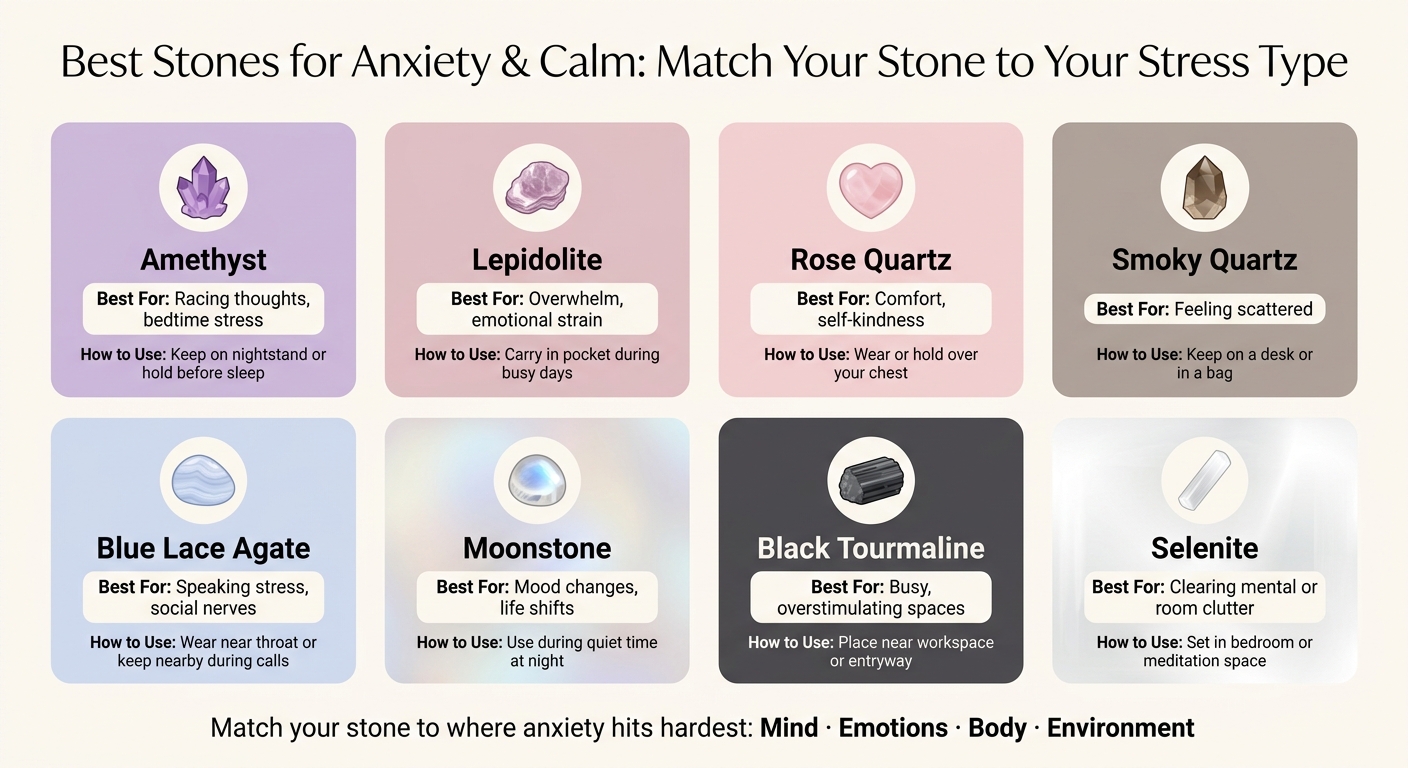
Best Crystals for Anxiety: Which Stone Matches Your Stress Type?
Top Crystals for Anxiety & Emotional Healing (Must Watch)_______________________________________
sbb-itb-cb05739
8 best stones for anxiety and calm
Start with the stone that fits the way your anxiety tends to show up. Some people deal with racing thoughts at night. Others feel scattered, overstimulated, or tense before a hard talk. The right pick depends on that pattern.
1. Amethyst
Amethyst is often picked to settle racing thoughts and support a calmer bedtime routine. Keep a tumbled piece on your nightstand or hold it during a 10- to 20-minute wind-down.
2. Lepidolite
Lepidolite is a lithium-bearing mica often linked with emotional steadiness. It can be a good match for days when stress hits all at once - work pressure, hard conversations, or that heavy sense of overwhelm. Slip it into your pocket and reach for it when tension starts to climb. Keep it away from water.
3. Rose Quartz
Rose quartz is often chosen for gentle emotional comfort and self-compassion during stressful periods. Wear it as a bracelet or necklace during the day, or hold it over your heart during a quiet moment.
4. Smoky Quartz
Smoky quartz can help when anxiety leaves you feeling scattered or ungrounded, especially in tense outside situations. Keep one on your desk or in your bag when you want something that feels steady and anchoring.
5. Blue Lace Agate
Pick this one for meetings, hard conversations, and presentations. It's linked with the throat chakra and clear communication. Wear it near your throat or keep it on your desk during calls.
6. Moonstone
Moonstone is linked with a quieter, more balanced kind of calm. Reach for it during stretches when your mood feels less steady or more changeable. Keep it on a nightstand or hold it during a short meditation at the end of the day.
7. Black Tourmaline
Black tourmaline is a grounding stone for overstimulating spaces. Place it near your workspace or by your front door as a simple cue to leave the day's stress at the entryway.
8. Selenite
Selenite is best for clearing, not grounding. Use it to clear mental clutter and improve focus and help a space feel lighter. Place it in a bedroom corner, on a shelf in a quiet room, or in a dedicated meditation space. Keep it away from water, since it degrades when wet.
How to choose the right stone for your needs
Use the stone list above as a starting point. Then narrow your choice based on where anxiety tends to show up for you.
Match the stone to your goal
There isn't one best stone for everyone. The better way to choose is by noticing where anxiety hits hardest: your mind, your emotions, your body, or the space around you.
For quieting the mind, amethyst and lepidolite are strong places to start. For emotional comfort, rose quartz and moonstone offer softer support. If you need grounding, smoky quartz and black tourmaline can feel like steady anchors. Blue lace agate is the clearest choice for social nerves or tense conversations. And when your environment feels heavy or chaotic, selenite is often the stone people reach for first.
Quick comparison table
| Goal | Best Fit | Main Use | Common Use |
|---|---|---|---|
| Quieter mind | Amethyst, Lepidolite | Calming, clarifying | Sleep support, meditation |
| Emotional comfort | Rose Quartz, Moonstone | Soft, nurturing | Heart-centered stress, mood shifts |
| Grounding | Smoky Quartz, Black Tourmaline | Rooting, protective | Physical tension, sensory overwhelm |
| Easier communication | Blue Lace Agate | Cooling, gentle | Meetings, social events, public speaking |
| Calmer home environment | Selenite | Clearing, light | Space clearing, bedroom corners |
What to look for when buying
Once you know which stone fits your goal, pick the form based on how you'll use it in daily life.
The first thing to check is whether the stone is genuine. Size matters less. A small, genuine stone is often a better pick than a large, poor-quality one. It should feel solid and natural, not overly perfect or plastic-like. If the color looks unnaturally bright or perfectly even all the way through, it's worth taking a closer look.
Then match the shape or format to your routine. Jewelry, like bracelets and necklaces, keeps the stone against your skin through the day. That can help if you want quick grounding during stressful moments. Tumbled stones are easy to keep in a pocket and easy to hold when tension spikes. Raw clusters or geodes make more sense on a desk or nightstand. Towers or lamps work well when you want the stone to stay in the room.
If ethical sourcing matters to you, Conscious Items offers genuine gemstone jewelry and home pieces, and each purchase supports sustainability by planting a tree.
Simple ways to use calming stones every day
Wear, carry, or keep nearby
Once you know which stone matches your goal, the easiest next step is to work it into routines you already have. Wear a bracelet, necklace, or keep a pocket stone with you during the day. A bracelet keeps the stone close and easy to touch. A necklace near the collarbone can serve as a quiet cue to pause before a meeting or a hard conversation.
You can also carry a tumbled stone in your pocket. It’s simple, portable, and easy to use. When stress starts to build, the smooth surface gives your hands something to rub, which can give you a clear point of focus.
If you work at a desk, place black tourmaline by your keyboard or selenite on a shelf. That small visual cue can prompt you to stop for a second and reset.
Use with meditation, breathwork, or rest
For quieter parts of the day, use your stone with breathwork or rest. One easy option is a short breathing break. Hold your stone and try a 5-5-5 breath: inhale for 5 seconds, hold for 5, and exhale for 5. Repeat it a few times to help settle your attention and bring you back to the present.
At bedtime, keep amethyst or lepidolite on your nightstand or tuck one into your pillowcase. The feel of the stone can give your mind one steady thing to focus on.
Conclusion: The best stone is the one that fits your current needs
Each stone in this roundup supports a different kind of calm. Amethyst can help with a quieter mind. Lepidolite is often linked to emotional steadiness. Rose quartz points toward self-compassion. Smoky quartz and black tourmaline are commonly used for grounding. Blue lace agate is tied to communication nerves, moonstone to balance during change, and selenite to clearing space.
The simplest way to choose is to match the stone to the kind of stress you feel most.
What matters most is regular use. A stone that becomes part of your daily routine tends to work better than one left sitting on a shelf.
If you’re not sure where to start, go with the stone that fits your main need right now: amethyst for a restless mind, lepidolite for emotional overload, or smoky quartz for physical tension. Start there, then shift as your needs change.
FAQs
Can I use more than one stone at a time?
Yes. A lot of people use more than one stone at the same time because each crystal may help with a different kind of stress or anxious feeling.
You can wear a few pieces together or place different stones around your space. That way, you can build a personal ritual and set up a more balanced, calming atmosphere.
How long should I use one stone before switching?
A common approach is to stick with one stone for 2 to 4 weeks. That gives you enough time to get a feel for it without changing things every day. Some people take a shorter route and carry one stone for 1 week, then pay attention to whether they keep reaching for it on their own.
You can also change stones more often and go by how you feel in the moment. For example, some people choose amethyst when their thoughts won't slow down, or smoky quartz when they feel physically overloaded.
How do I know if a stone is genuine?
The information provided doesn’t explain how to check whether a stone is genuine.
Conscious Items sells bracelets and necklaces made with genuine gemstones such as Amethyst, Black Tourmaline, and Rose Quartz. These pieces are meant to support emotional balance and energy alignment.
Crystals are intended only as a complementary mindfulness tool, not medical care.
