


If you want a simple place to start, pick one crystal that matches one feeling you want to work on and pair it with one small daily habit. That’s the core idea here.
I’d sum the article up like this:
- These 10 crystals are used as symbols for intention and reflection, not medical treatment.
- Each one lines up with a common emotional theme, like self-love, calm, grounding, confidence, change, or communication.
- The most useful ways to use them are simple: wear them, carry them, keep them by your bed, place them on your desk, or use them during journaling or meditation.
- The article also flags care details, like stones that can fade in direct sun or get damaged by water.
- If you’re dealing with panic attacks, lasting sadness, or thoughts of self-harm, the article says to contact a licensed mental health professional or healthcare provider.
A few practical points stand out right away:
- Rose Quartz: self-love and comfort
- Amethyst: calm and mental quiet
- Black Tourmaline: grounding and feeling steady
- Lepidolite: support during change
- Citrine: confidence and upbeat energy
- Selenite: clarity and clearing
- Moonstone: emotional ups and downs
- Rhodochrosite: self-worth and old hurt
- Amazonite: calm, honest expression
- Smoky Quartz: letting go and staying grounded
The article keeps the routine side simple too. For example, it suggests things like holding a stone for about 60 seconds before bed, placing one on a nightstand or desk, or trying 1 to 3 crystals for 2 to 4 weeks and watching for shifts in mood, stress, or self-talk.
Bottom line: I’d read this as a guide to small self-care rituals. The crystals are there to help you pause, breathe, and reset.
Top Crystals for Anxiety & Emotional Healing (Must Watch)_______________________________________
Quick Comparison
| Crystal | Main emotional theme | Easy daily use | Common spot/form |
|---|---|---|---|
| Rose Quartz | Self-love, comfort | Hold over the heart or wear daily | Bracelet, ring, nightstand |
| Amethyst | Calm, mental clarity | Use before sleep or during stress | Pendant, under pillow, bedside |
| Black Tourmaline | Grounding, protection | Carry during tense moments | Pocket stone, desk, doorway |
| Lepidolite | Change, sadness, stress | Keep near bed or hold during life shifts | Tumbled stone, jewelry |
| Citrine | Confidence, joy | Carry or place on a work desk | Bracelet, pendant, workspace |
| Selenite | Clarity, clearing | Keep on a desk or nightstand | Wand, lamp, tower |
| Moonstone | Emotional balance, change | Wear during emotional highs and lows | Jewelry, pocket stone |
| Rhodochrosite | Self-worth, healing old pain | Hold while journaling or place over heart | Tumbled stone, palm stone, pendant |
| Amazonite | Communication, calm | Pause with it before a hard talk or email | Bracelet, pendant, desk |
| Smoky Quartz | Release, grounding | Use with slow breathing at day’s end | Pocket stone, desk, bedside |
If I had to put the article into one sentence: choose the stone that fits your current emotional need, then use it in a way that fits your day.
How People Use Emotional Healing Crystals Every Day
People tend to weave crystals into small, everyday habits: while getting dressed, sitting at a desk, or winding down at night. In most cases, these stones work best as symbols tied to routines you already do. Put simply, the best crystal habit is the one that slips into your day without a fight.
Wearing crystal jewelry is one of the easiest ways to do that. A rose quartz bracelet on your wrist can act as a small reminder to stay kind and steady when things get tense. An amethyst pendant worn through the workday can keep a sense of calm within reach.
Carrying a tumbled stone is another easy habit. A small stone in your jacket pocket or bag gives you something to reach for during stressful moments - a work meeting, a packed commute, or a long wait. Rolling it between your fingers can prompt you to slow down and breathe. Some people keep a small pouch and pick one stone each morning.
At home, placement can matter more than people think. A calming stone on your nightstand - selenite or amethyst are common picks - becomes a visual cue that it’s time to rest. Holding a stone for about 60 seconds before bed while taking slow, deliberate breaths is a simple bedtime ritual. On a work desk, a grounding stone like smoky quartz or black tourmaline near your keyboard can act as a quiet anchor during a demanding day.
For quieter moments, people often use crystals during meditation or journaling. Use the stone as a focal point: hold it during a short meditation or place it on your journal before writing. Over time, the link starts to build, and reaching for that stone becomes a signal to pause and reflect.
1. Rose Quartz
Known as the "Stone of Universal Love," Rose Quartz is often used for self-love and emotional comfort. It’s linked with the heart chakra and self-worth.
Primary Emotional Focus
People often turn to Rose Quartz for self-compassion and a gentler emotional state. It’s the kind of stone many use when they want to slow down, soften up, and treat themselves with a little more care.
Best Everyday Use
A simple way to use Rose Quartz is to wear it as jewelry so it stays close to you. Some people wear it on the left wrist for receiving and the right wrist for sharing.
If you want something more low-key, hold the stone over your heart chakra for 15 minutes after a tiring day. It can feel like a small reset when your nerves are shot and you need a quiet moment.
Common Form or Placement
Rose Quartz often comes as bracelets, rings, and tumbled stones. You can also place it on a nightstand as a calming bedtime cue.
One small note: keep it out of direct sunlight, since too much sun can cause fading.
Supportive Intention
Set a simple intention: "I am worthy of unconditional love."
Next: Amethyst, often used for calm and mental clarity.
2. Amethyst
Amethyst is one of the best-known stones for calm and emotional balance.
Primary Emotional Focus
Amethyst is often linked to the third eye chakra. People turn to it when they want a quieter headspace during hard or stressful days. It’s often used to help slow racing thoughts and settle the mind into a calmer state.
Best Everyday Use
Wearing an amethyst pendant during the workday can act as a small prompt to let go of stress. If your mind feels cloudy or you’re stuck on a hard choice, hold the stone and take a few slow breaths. That simple pause can help you feel a bit more clear and steady.
For sleep, place amethyst under your pillow or on your nightstand to support a calmer night.
Common Form or Placement
Amethyst is often worn as jewelry or placed on a nightstand. An amethyst lamp is also a popular pick if you want a calmer feel at home.
Supportive Intention
Use this intention: I choose peace.
Next: Black Tourmaline, for grounding when you need emotional protection.
3. Black Tourmaline
Black Tourmaline is a go-to pick when emotions feel scattered or heavy. For a long time, people have linked it with protection and grounding.
If Amethyst helps settle the mind, Black Tourmaline is more about staying steady when stress feels heavier.
Primary Emotional Focus
Black Tourmaline is often used as a grounding symbol when emotions feel heavy or overstimulating. It’s closely linked with the root chakra, the energy center tied to stability and a sense of safety. When stress starts stacking up, or when other people’s moods begin to rub off on you, this stone is often used to help you feel anchored. That can matter a lot in busy places or emotionally draining moments. It’s used more for stability than for lift.
Best Everyday Use
Keep a piece of Black Tourmaline on your desk during high-pressure work, or carry a tumbled stone in your pocket when you’re heading into a tense situation. Need a quick reset? Hold the stone, take a few slow breaths, and set an intention before a hard conversation or a packed commute. For many people, the simplest move is to keep it nearby where stress tends to hit the most.
Common Forms and Placement
Raw stones work well near entryways or on a desk. Jewelry - especially bracelets and pendants - makes it easy to keep the stone close through the day. A Black Tourmaline bracelet is a simple way to wear it daily, while a raw piece by the front door is a common spot at home.
Supportive Intention
I am grounded and steady.
Next: Lepidolite, a softer option for emotional balance.
4. Lepidolite
Lepidolite is often called the "Stone of Transition." That nickname fits well. It's most often tied to periods of change, like starting a new job or moving to a new place.
Primary Emotional Focus
This stone is linked with the third eye, crown, and heart chakras. People often use it during periods of grief, anger, disappointment, and sadness.
Best Everyday Use
For day-to-day use, Lepidolite makes the most sense during stressful life shifts and at bedtime. You can keep it by your bed to help with a calmer wind-down. Or hold a tumbled stone when you're dealing with a tough shift, such as a new job or move.
Common Form or Placement
Lepidolite ranks just 2.5 on the Mohs hardness scale, so tumbled stones are usually the better pick if you want to carry it in a pocket or bag. Bracelets and necklaces are also common ways to wear it. Skip water and stick to dry cleansing methods.
Supportive Intention
I move through change with calm.
Next: Citrine, often used for a brighter emotional outlook.
5. Citrine
Citrine is often tied to confidence, joy, and optimism. A lot of people also see it as a sign of motivation and self-belief. It has a bright, uplifting feel, so it’s often linked with success and forward motion. If Lepidolite is more about softening into change, Citrine points you toward confidence and momentum.
Best Everyday Use
Carry Citrine when you want a little boost in confidence, or place it on your desk to help your workday feel more steady.
Common Form or Placement
Citrine is often worn as a bracelet or pendant, which makes it easy to keep close throughout the day.
Supportive Intention
I move forward with confidence.
Next: Selenite, often used for clarity and energetic cleansing.
sbb-itb-cb05739
6. Selenite
Selenite is often described as a clearing stone. People turn to it to sweep away leftover energy and bring back a sense of lightness and mental clarity, which is why it often shows up on desks and nightstands.
Primary Emotional Focus
Selenite is used for clarity and calm. It’s a common pick when your mind feels crowded or you’re stretched too thin. For sensitive people, it can feel especially soothing, like turning down the volume on mental noise.
Best Everyday Use
A Selenite wand or lamp can sit on your desk during long work sessions to help ease mental fatigue. On a nightstand, it’s often used to support more restful sleep. It’s also commonly used to refresh other crystals - just place them on a Selenite plate.
Its soft, clean look helps too. You can leave it out in plain sight without it feeling out of place in the room.
There’s one care detail you don’t want to miss: Selenite is water-soluble and ranks only 2 on the Mohs hardness scale. So skip water completely. Use dry cleansing methods like moonlight or sound cleansing instead.
Common Form or Placement
Selenite lamps are often kept in bedrooms or workspaces to help maintain a calm space. Towers and clusters fit nicely on a meditation altar, while small wands are often used for quick body-sweeping rituals.
Supportive Intention
Clear energy, restore calm.
Next: Moonstone, often used for emotional cycles and intuition.
7. Moonstone
After Selenite’s clear, cleansing feel, Moonstone is a gentler choice for emotional change and adjustment. People often turn to it during times of transition or uncertainty, especially when feelings seem hard to predict and even harder to handle.
Primary Emotional Focus
Moonstone is often used to support emotional steadiness during change. It’s a common pick for people who feel overwhelmed when life feels up in the air. On emotionally crowded days, keeping Moonstone close can feel comforting.
Best Everyday Use
A simple way to use Moonstone is to wear it as jewelry, so it stays close through emotional highs and lows. Some people also keep it nearby during stressful social situations, when tension starts to build.
Common Form or Placement
Moonstone is most often worn as jewelry or carried in a pocket.
Supportive Intention
I move through change with calm.
Next: Rhodochrosite, often used for self-worth and emotional repair.
8. Rhodochrosite
Rhodochrosite, sometimes called the Stone of the Compassionate Heart or Inca Rose, is often used for deeper emotional repair. If Moonstone helps with emotional shifts, Rhodochrosite tends to go further. It’s often connected with self-worth, old pain, and the kind of feelings people usually try to push aside.
Primary Emotional Focus
Rhodochrosite is linked with compassion and the work of moving through old hurt instead of dodging it. Some people use it when they want to face hard memories tied to shame or self-criticism. It’s also tied to the heart and solar plexus chakras, which connects emotional healing with self-worth and confidence.
Best Everyday Use
A simple way to use it is to carry a tumbled Rhodochrosite stone in your pocket. When your inner critic starts talking too loud, holding the stone can help you pause and respond with a bit more care.
You can also place it over your heart for 5–10 minutes in the morning to set a more self-compassionate tone for the day. Another common use is to keep it nearby while journaling about past experiences.
Common Form or Placement
Rhodochrosite is often sold as:
- tumbled stones
- palm stones
- pendants
- bracelets
For emotional work, place it over the heart or solar plexus. It ranks 3.5 to 4 on the Mohs hardness scale, so it’s better to cleanse it with moonlight, sage smoke, or sound instead of water.
Supportive Intention
I open to self-love and gentle healing.
Next: Amazonite, often used for calmer communication and emotional balance.
9. Amazonite
Amazonite is often called the Stone of Courage and the Stone of Truth. People turn to it to ease worry and help with clearer communication. In plain terms, it sits at the meeting point of emotional steadiness and honest self-expression.
Primary Emotional Focus
Amazonite is linked with the Throat and Heart Chakras, so it’s often used for calm, honest expression. It’s also tied to moving through the fear of judgment, which can make it easier to speak openly with yourself and with other people.
Best Everyday Use
Keep Amazonite near your computer or phone as a calming desk stone on screen-heavy days. It’s also thought to help ease aggravation during tense stretches.
Common Form or Placement
Amazonite is often worn as a bracelet or pendant so it stays close all day. You can also set it on your nightstand or desk. Don’t soak it in water. Common cleansing methods include moonlight, sage smoke, or a singing bowl.
Supportive Intention
Hold the stone and say: "I communicate with clarity and compassion."
Next: Smoky Quartz, a grounding stone for emotional heaviness.
10. Smoky Quartz
After Amazonite’s focus on honest expression, Smoky Quartz brings things back down to earth. It rounds out this list as a grounding stone that people often use when they want to let go of emotional weight.
Primary Emotional Focus
Smoky Quartz is most closely linked with the Root Chakra, which is tied to feelings of safety and stability. Instead of just calming emotions, this stone is often used to help you release them rather than keep them bottled up. That can make it a solid choice during big life shifts, like a job loss, a breakup, or a move, when overwhelm tends to hit the hardest. In moments like that, Smoky Quartz can feel like a simple tool for a fast reset.
Best Everyday Use
Hold the stone, breathe in for 4, out for 6, and picture the tension leaving. A lot of people also keep a tumbled stone in their pocket and use it like a worry stone, reaching for it when anxious thoughts start to spiral. Another common use is placing Smoky Quartz near electronics or in a busy home office, where it’s often thought to help soften emotional strain in shared spaces.
Common Form or Placement
Tumbled stones and jewelry are the easiest options for daily use. A bracelet worn on the non-dominant hand is a popular pick. Larger pieces are often kept near a desk or front door to help set a calm tone in the space. For sleep, a small tumbled stone under the pillow or on a nightstand is a common setup for winding down and letting go of the day’s heaviness. Think of it as a small cue to loosen your grip on what feels too heavy.
Supportive Intention
Release what no longer serves me. Stay grounded.
Side-by-Side Look at All 10 Crystals
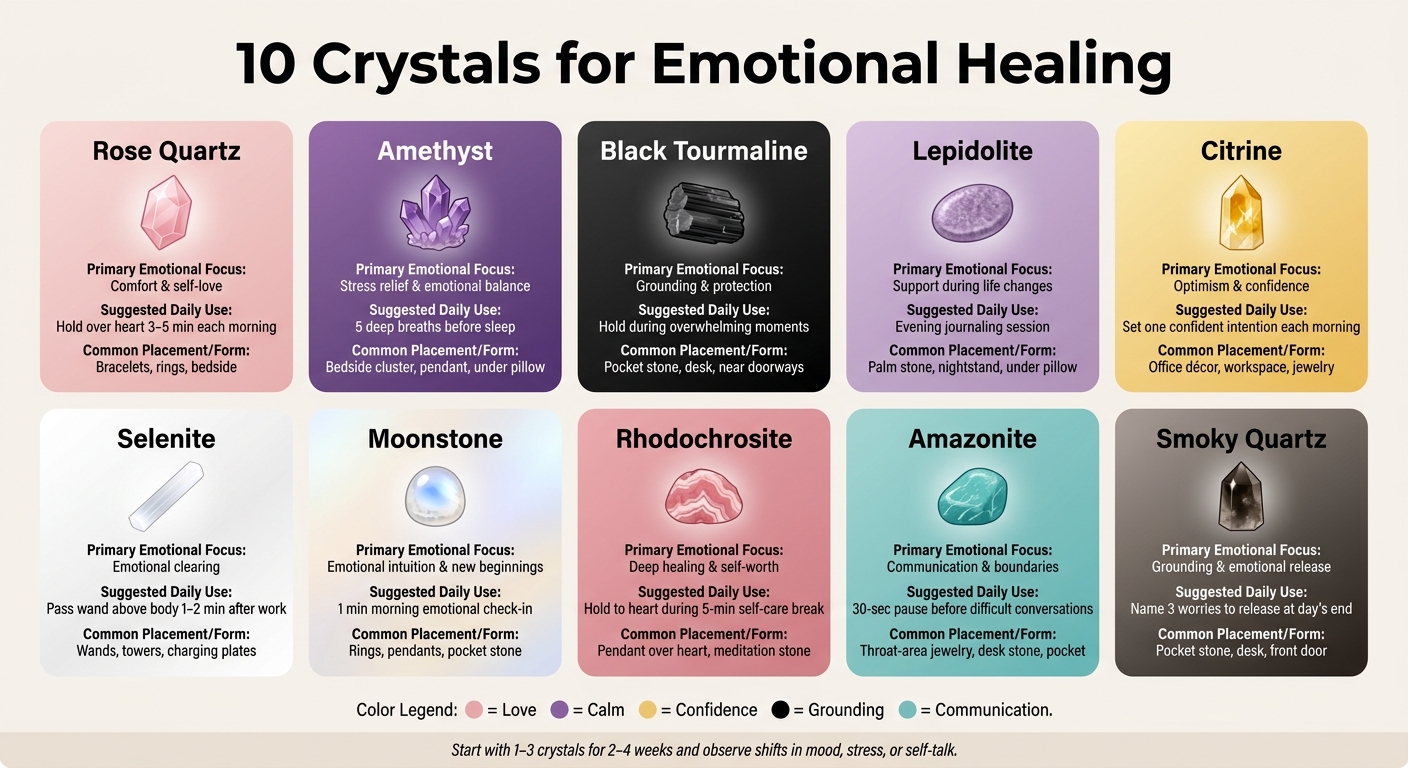
10 Crystals for Emotional Healing: Quick Reference Guide
Now that all 10 stones are on the table, this chart makes the comparison a lot easier. You can line up each crystal with the feeling you want to support and the small daily habit that makes sense for your routine.
| Crystal | Primary Emotional Focus | Common Form or Placement | Suggested Daily Use |
|---|---|---|---|
| Rose Quartz | Comfort & self-love | Bracelets, rings, bedside | Hold over your heart for 3–5 minutes each morning with a self-love affirmation |
| Amethyst | Stress relief & emotional balance | Bedside cluster, pendant, under pillow | Take 5 deep breaths with the stone before sleep to release the day's tension |
| Black Tourmaline | Grounding & protection | Pocket stone, desk, near doorways | Hold briefly during overwhelming moments and visualize stress draining away |
| Lepidolite | Support during life changes | Palm stone, nightstand, under pillow | Use during a short evening journaling session to stabilize mood |
| Citrine | Optimism & confidence | Office décor, workspace, jewelry | Set one confident intention each morning while focusing on the stone |
| Selenite | Emotional clearing | Wands, towers, charging plates in living spaces | Slowly pass a wand above your body for 1–2 minutes after work |
| Moonstone | Emotional intuition & new beginnings | Rings, pendants, pocket stone | Spend 1 minute each morning noticing your emotional state and setting a calm intention |
| Rhodochrosite | Deep healing & deeper self-healing | Pendant over heart, meditation stone | Hold to your heart during a 5-minute self-care break and offer yourself one kind statement |
| Amazonite | Communication & boundaries | Throat-area jewelry, desk stone, pocket | Pause for 30 seconds with the stone before a difficult conversation or email |
| Smoky Quartz | Grounding & emotional release | Pocket stone, desk, front door | At day's end, mentally name three worries you're ready to let go of while holding the stone |
A couple of quick distinctions can help if you're stuck between two similar picks. Black Tourmaline leans more toward protection, while Smoky Quartz is more about letting stress go. Rose Quartz focuses on comfort and self-love, while Rhodochrosite speaks more to deeper emotional repair.
Use the chart to narrow down your top options, then go with the one that fits most easily into your day.
How to Choose the Right Crystal for You
Start with the chart above, then pick the crystal that fits what you need right now. If you want calm, go with amethyst or lepidolite. For heart healing, try rose quartz or rhodochrosite. If confidence is the goal, choose citrine. For grounding, black tourmaline or smoky quartz are good places to start.
Still stuck between two stones? Use color as a simple tie-breaker. It’s not magic math, but it can help narrow things down:
- Pink for love
- Purple for calm
- Yellow or gold for confidence
- Black for grounding
- Blue-green for communication
Once you’ve picked a stone, pay attention to your reaction. Hold it in your hand or look at an image of it. Take a few slow breaths and notice what comes up. A sense of ease, warmth, openness, or even quiet curiosity can be a sign that the stone fits well.
It also helps to match the form of the crystal to your day-to-day life. A pocket stone is easy to carry. A bracelet or ring keeps it close all day. A bedside piece can work well if you want it near you at night.
Keep it simple at first. Start with 1 to 3 crystals and try them for 2 to 4 weeks. During that time, note changes in your mood, stress level, or self-talk. If you see positive shifts, stick with it. If something feels off, go back to your intention and make a change. As your routine shifts, your crystal choice can shift too.
Conclusion
After looking at the stones above, the big takeaway is pretty simple: emotional healing crystals tend to work best as symbols that support your routine. Pick the stone that lines up with your day-to-day habits and the feeling you want to focus on.
Their worth often comes from the intention you give them - a small pause to breathe, reset, and come back to what matters to you.
If you want to keep a stone with you each day, Conscious Items offers ethically sourced crystal jewelry made with genuine gemstones.
Start with one crystal, one intention, and one small daily ritual.
FAQs
How do I choose my first crystal?
Choosing your first crystal is a personal step. A simple way to begin is to think about what you need most right now. Maybe you want more peace, a clearer mind, or a little more care for yourself. From there, trust your gut and notice which stone you feel drawn to.
Many beginners start with a few well-known options:
- Clear Quartz for clarity
- Amethyst for calm
- Rose Quartz for self-love
Conscious Items offers ethically sourced crystal jewelry and stones to support your journey.
Can I use more than one crystal at once?
Yes. Using more than one crystal can help when you want support for a few emotional needs at the same time.
For example, you might pair Rose Quartz with Amethyst. You can also place different crystals on chakra points during meditation, with each one tied to a specific aim.
That said, it helps to keep things simple. Focus on one or two main intentions at a time so your practice doesn’t feel scattered.
How long should I try a crystal before switching?
There’s no fixed timeline for using a crystal. This is personal, and your own sense of what feels right matters most. Let that guide which stones match your energy and what you need at the time.
It’s also okay to try different options. You can switch crystals whenever you feel drawn to, and if another stone seems like a better fit, go with your gut.
