


Heartbreak can throw off your sleep, your focus, and your sense of calm. In this guide, I’d sum it up like this: each crystal matches a different part of recovery - from self-blame and anger to anxiety, old wounds, hope, and speaking up again.
Here’s the full list covered in the article:
- Rose Quartz for self-kindness and early grief
- Rhodonite for anger, hurt, and resentment
- Amethyst for racing thoughts and sleep trouble
- Lepidolite for stress, overthinking, and emotional balance
- Rhodochrosite for old wounds and self-worth
- Green Aventurine for hope and moving forward
- Amazonite for truth, boundaries, and speaking clearly
The main idea is simple: pink and green stones are often linked to heart healing, while stones like Amethyst and Lepidolite are more often used for mental calm. In the article, I also noticed a strong focus on easy daily use - like keeping a stone by the bed, holding one while journaling, or wearing one as jewelry.
One line matters most: crystals are spiritual support tools, not medical care. If heartbreak is making it hard for you to function for more than 2–3 weeks, or if you have thoughts of self-harm, reach out to a licensed mental health professional right away.
🌸RHODONITE Crystal Healing & Spiritual Properties ~ Root & Heart Chakra Energy for Grounded Love 💗
Quick Comparison
| Crystal | Best known for | Good time to use it |
|---|---|---|
| Rose Quartz | Self-compassion | Right after a breakup or loss |
| Rhodonite | Processing hurt and resentment | When pain turns into anger |
| Amethyst | Calming the mind | When thoughts won’t slow down |
| Lepidolite | Easing stress and overthinking | When anxiety sticks around |
| Rhodochrosite | Old wounds and self-worth | When deeper patterns show up |
| Green Aventurine | Hope and forward motion | When you’re ready to rebuild |
| Amazonite | Boundaries and honest expression | When you need to speak up |
If I had to put the article into one plain takeaway, it would be this: pick the stone that fits how you feel today, use it in a small daily ritual, and let it support you while you heal.
How Crystals Can Support Emotional Recovery
Crystals can give you something steady to come back to when grief hits hard. Think of them as small anchors for intention, reflection, and emotional balance. Each one below is tied to a different part of recovery.
In crystal traditions, the heart chakra is linked to love, compassion, and the release of grief. After a breakup, practitioners often see this energy center as tightening or closing down. That’s why pink and green stones are so often used here. They’re meant to help ease grief and slowly open the heart again.
Rose Quartz is often used for self-compassion and easing harsh self-talk. Rhodonite is linked to working through active hurt and resentment. Lepidolite is commonly used to calm anxious, looping thoughts. In other words, each stone can support a different stage of healing.
The practices are simple and easy to fit into daily life. You might carry a tumbled stone in your pocket on a rough day. You could place Rose Quartz or Lepidolite on your nightstand for more peaceful evenings. Some people hold a crystal while journaling because it helps them stay honest about what they feel.
Meditation is another common option. A lot of people place a stone over the heart chakra and picture a soft pink or green light growing a little more with each breath. If you want to keep crystals nearby during the day, Conscious Items offers ethically sourced crystal jewelry and home pieces.
If you use your stones often, cleanse them on a regular basis. Moonlight, singing bowls, and selenite plates are all common choices. With that in mind, here’s how each stone works.
1. Rose Quartz
Rose Quartz is often the first stone people reach for after heartbreak. It fits the earliest stretch, when grief is heavy and self-blame keeps looping in your head. Its energy is soft and steady.
Primary Emotional Theme
Rose Quartz is tied to self-compassion. After a breakup, that inner voice can get harsh fast: Why didn’t I see it coming? Why am I not over this yet? This stone is often used to calm that kind of self-criticism. In crystal traditions, Rose Quartz is linked to the heart chakra and emotional reopening, especially around letting go of fear, resentment, and sorrow.
Best Everyday Use
Keep it simple. Carry a tumbled stone in your pocket on rough days, or set it on your nightstand to support rest while you’re grieving. If you want it with you from morning to night, a Rose Quartz necklace keeps it close.
Rose Quartz helps soften the first sharp hit. Rhodonite comes in when that pain starts to shift into anger or resentment.
2. Rhodonite
Rhodonite can help when heartbreak hardens into anger, resentment, or a sense of betrayal. Rose Quartz tends to soothe the pain. Rhodonite is more about facing it head-on.
Primary Emotional Theme
Rhodonite is tied to active emotional processing. In plain English, it can help you admit what hurt, sit with it, and work toward forgiveness without acting like nothing happened. That matters. Forgiveness isn't the same as pretending the damage was small.
Its pink-and-black veining mirrors that blend of pain and repair. It's also connected with both the Heart Chakra and the Root Chakra. That grounding side can help you stay steady instead of getting pulled into a spiral.
Best Everyday Use
Carry a tumbled piece on days when you expect a hard conversation or think you might run into an ex. You can also hold it while journaling, especially when you're trying to put buried feelings into words. If you want it near you from morning to night, a Rhodonite bracelet makes that easy.
When anger starts to shift into racing thoughts or sleepless nights, Amethyst is often the next step.
3. Amethyst
Rhodonite helps you face the pain. Amethyst helps settle the mental noise that comes after.
Primary Emotional Theme
When heartbreak turns into sleepless nights and the same thoughts keep circling, many people reach for Amethyst. In crystal traditions, Amethyst is often used to calm a busy mind and support a clearer point of view. With heartbreak, the goal isn't to sink further into the pain. It's to create enough calm to think straight and ease some of the worry.
Chakra Connection
Amethyst is linked to the Crown and Third Eye chakras, so it can be a good fit when you need perspective, clarity, and a steadier inner voice.
Best Everyday Use
Keep Amethyst on your nightstand or under your pillow. If your breakup has made sleep harder, having it nearby at night may help settle looping thoughts before bed. You can also keep it close during stressful evenings, especially when your mind won't slow down. It pairs well with Rose Quartz for heart-centered calm or Rhodochrosite for deeper emotional work.
Once your mind feels steadier, Rhodochrosite can help with the deeper emotional work.
4. Lepidolite
If Amethyst helps settle your mind at night, Lepidolite steps in when anxiety hangs around after the first wave of shock. People often call it the Anxiety Stone, and that makes sense. It speaks to that in-between stage, when the jolt has passed but the self-doubt, overthinking, and “what if” thoughts won’t quite let go.
Lepidolite is a soft mica stone tied to calm and emotional balance.
Chakra Connection
Lepidolite is linked to the Heart and Third Eye chakras.
Best Everyday Use
Because Lepidolite is soft, it’s better to keep it on your nightstand or under your pillow than carry it around with your keys. During tough moments, hold a tumbled piece in your hand. You can also place it on your third eye during meditation to help clear mental clutter.
Supportive Pairing
Lepidolite pairs well with Rose Quartz. Rose Quartz helps ease self-criticism, while Lepidolite helps calm mental spin.
As anxiety starts to settle, deeper heart repair can feel a little more within reach.
sbb-itb-cb05739
5. Rhodochrosite
As the anxiety starts to settle, Rhodochrosite can help bring up the deeper hurt sitting underneath it. It’s often tied to older emotional pain that can come back after heartbreak, including abandonment fears and attachment patterns. It may also help bring repeating relationship patterns to the surface. That makes it a good fit when a breakup has stirred up more than present-day grief.
Rhodochrosite also helps direct love inward first. In plain terms, it can support you as you face old wounds, ease harsh self-talk, and start building your sense of self-worth again.
Chakra Connection
Rhodochrosite connects to the heart and solar plexus chakras, linking emotional openness with self-worth.
Best Everyday Use
Because Rhodochrosite is a soft stone, it’s better for calm, hands-on use than for carrying loose in a pocket. A simple way to work with it is during journaling or after a therapy session, when you’re sitting with thoughts that may point to older wounds or repeating relationship patterns.
You can also place it on the solar plexus, just above the navel, for 15–20 minutes during meditation. Another option is to hold it over your heart during mirror affirmations to support self-compassion. Keep it away from water and direct sunlight.
Supportive Pairing
Rhodochrosite pairs well with Rose Quartz: Rose Quartz softens the edges, while Rhodochrosite works on deeper patterns.
6. Green Aventurine
When deeper wounds come to the surface, Green Aventurine helps you move from healing into rebuilding. Often called the "Stone of Opportunity," it supports the move from pain toward action. It’s often used to let go of guilt and fear while bringing back optimism and confidence.
That push ahead is also why it’s linked to both the heart and the solar plexus.
Chakra Connection
Green Aventurine is most closely tied to the Heart Chakra, where it may help steady emotional flow and ease lingering resentment or fear. It also connects with the Solar Plexus Chakra, bridging heart-centered healing with renewed self-confidence and willpower.
Best Everyday Use
The best way to use it is in small, daily habits that keep you moving ahead. Green Aventurine is durable enough for everyday wear, so a pendant works well because it stays near the Heart Chakra all day.
You can also hold it for 5 to 10 minutes in the morning and picture a soft green light in your chest to help loosen leftover resentment. On days when you need a quiet nudge, keep a tumbled stone in your pocket.
Supportive Pairing
Green Aventurine pairs well with Rose Quartz. Rose Quartz helps soften the hurt. Green Aventurine supports the next step.
7. Amazonite
Heartbreak has a way of muddying your sense of self. It can leave you second-guessing what you need and make it tough to say it out loud. As the first wave of grief begins to ease, Amazonite can help you find your voice again, set limits, and trust your own needs. Often called the "Truth and Boundaries Stone," it’s linked with emotional clarity and firmer boundaries after a relationship ends.
Chakra Connection
Amazonite mainly supports the Throat Chakra and also connects with the Heart Chakra. That link matters after a breakup. The throat is tied to speaking your truth, while the heart carries the pain. When you're hurting, those two can fall out of sync. You know what you feel, but the words just don’t come.
Amazonite is often described as a stone that helps bring the mind, heart, and inner wisdom into better balance. In plain English, it may help you make room for honest communication and calmer boundary-setting.
Best Everyday Use
A pendant is one of the easiest ways to wear Amazonite, since it keeps the stone close to both your throat and heart. If you tend to slip into people-pleasing, carry a tumbled piece in your pocket. That small habit can act like a quiet nudge to stand your ground.
During anxious moments, use it as a worry stone. For journaling, place it on your notebook and ask, "What truths did I suppress in this connection?"
Supportive Pairing
Amazonite pairs well with Amethyst. Amazonite helps with clear boundaries, while Amethyst can help steady the emotions that come up.
Side-by-Side Look at All 7 Crystals
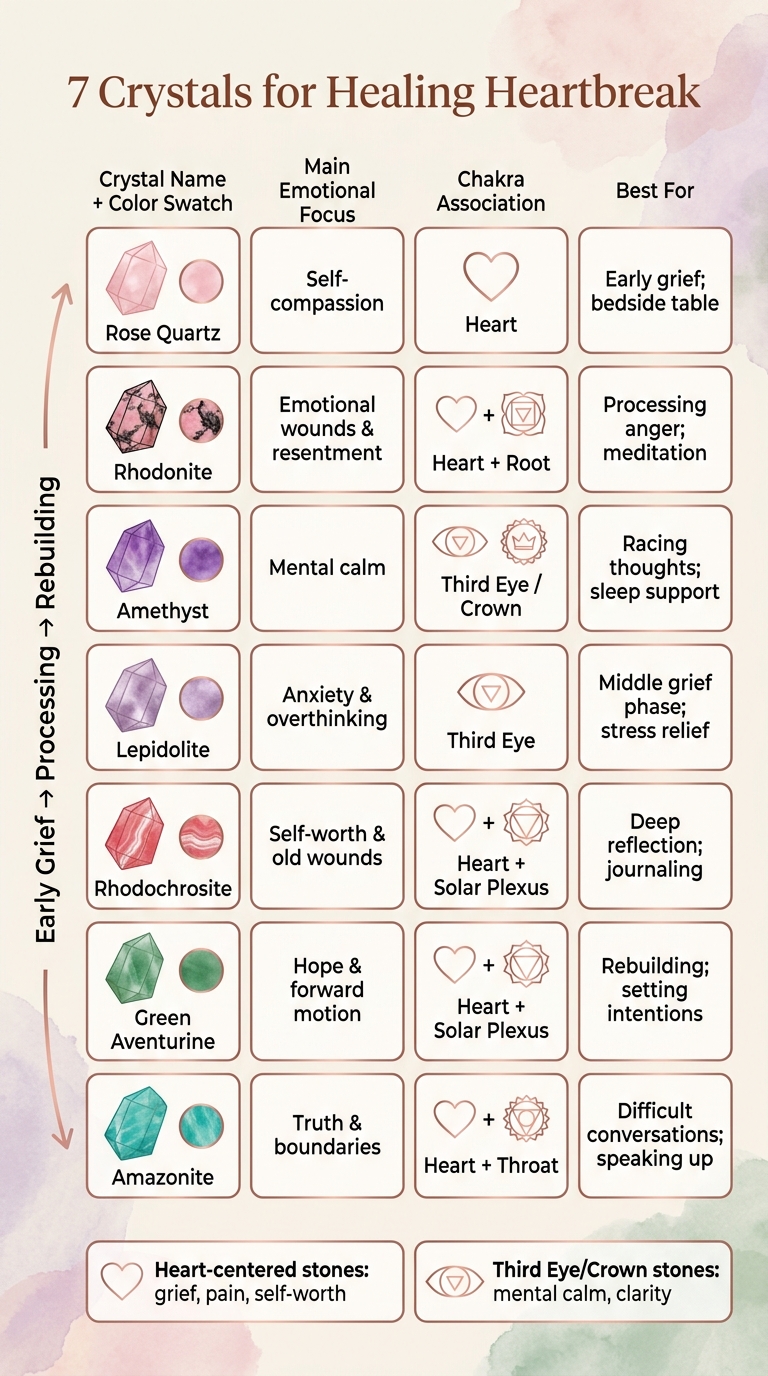
7 Crystals for Healing Heartbreak: Quick Reference Guide
Use this table to line up each crystal with what you need right now. If you're in a certain part of the healing process and want a quick match, this makes it easy.
| Crystal | Main Emotional Focus | Chakra Association | Best for |
|---|---|---|---|
| Rose Quartz | Self-compassion | Heart | Bedside table; early grief |
| Rhodonite | Emotional wounds | Heart | Processing anger; meditation over the chest |
| Amethyst | Mental calm | Third Eye / Crown | Quieting racing thoughts; under the pillow for sleep |
| Lepidolite | Anxiety | Third Eye | Middle phase of grief; palm stone during stress |
| Rhodochrosite | Self-worth | Heart | Deep reflection; journaling or therapy prep |
| Green Aventurine | Hope | Heart | Re-entering social settings; setting intentions |
| Amazonite | Truth and boundaries | Heart / Throat | Expressing feelings; difficult conversations |
There’s a simple pattern here. Heart-centered stones tend to help with grief, emotional pain, and self-worth. Third Eye and Crown stones lean more toward mental calm and settling a busy mind. Amazonite sits in the middle, linking the Heart and Throat.
Pick the crystal that fits where you are now. Then move to the next section for easy ways to use it each day.
Easy Ways to Use These Crystals Every Day
Once you've chosen a crystal, the best move is to use it in a way you can stick with. Keep it simple. If a practice feels like a chore, you probably won't do it for long.
Carry a stone in your pocket or purse. Tumbled Rose Quartz, Green Aventurine, or Lepidolite are solid picks for hard days. Keep one close so you can reach for it when you need a moment to feel more grounded.
Wear them close to your body. Jewelry makes this easy because you don't have to think about it. Conscious Items offers ethically sourced crystal jewelry for daily wear.
Put them where you sleep and work. Place Amethyst or Lepidolite on your nightstand. Then keep Green Aventurine or Amethyst on your desk, where you'll actually see and use them.
Pair them with journaling or breathwork. Hold Rhodochrosite or Rhodonite while journaling. Use Rose Quartz over your chest during breathwork.
Cleanse your stones on a regular basis, especially the ones you carry or sleep with. Moonlight or a selenite plate works well.
If you're still deciding, the next section shows which crystal fits your current stage of healing.
Which Crystal Fits Where You Are Right Now
If you want a faster match, use this guide to choose the stone that lines up with how you feel right now.
| If You Feel… | Reach For | Why It Helps |
|---|---|---|
| Self-critical | Rose Quartz | Softens self-judgment |
| Resentful or betrayed | Rhodonite | Helps process resentment |
| Anxious or foggy | Amethyst | Eases stress and clears the mind |
| Overwhelmed or sleepless | Lepidolite | Calms racing thoughts |
| Stuck in old patterns | Rhodochrosite | Helps surface old wounds and repeating patterns |
| Ready for hope | Green Aventurine | Supports optimism |
| Struggling to speak up | Amazonite | Supports clear boundaries |
If two stones seem like a fit, use both. You can switch between them as your needs shift.
Conclusion
Heartbreak tends to heal in waves. Some days feel lighter. Others hit out of nowhere. Now that you’ve seen what each stone can help with, pick the one that fits the stage you’re in today. Even a small ritual can help you feel more steady.
Choose the stone that matches where you are right now. Healing changes over time, and the crystal that helps you this week might not be the one you need next week.
Crystals can support healing, but they do not replace professional help. If you’re struggling to function for more than 2–3 weeks, or if you’re having thoughts of self-harm, please reach out to a therapist or a crisis line.
Just five minutes a day with one stone can help you feel anchored. The point isn’t to rush healing. It’s to give yourself steady support while you move through it.
FAQs
Can I use more than one crystal at a time?
Yes. Using more than one crystal can help with different emotional needs at the same time. For example, you might pair Rose Quartz for self-love with Lepidolite for calm.
You can carry them, place them on chakra points, or wear them as jewelry. Go with what feels right, but keep your practice centered on one or two main intentions so your energy feels grounded instead of scattered.
How do I choose the right crystal for my breakup?
Choose the stone that fits what you need most right now, and trust your gut. Keep it simple: do you need self-kindness, calm, grounding, or help letting go of old patterns?
- Rose quartz: self-love, comfort, heartbreak
- Lepidolite: calm, anxious thoughts
- Rhodonite: deep grief, emotional healing
- Smoky quartz: grounding, stability
- Malachite: deeper transformation
How often should I cleanse these crystals?
Cleanse them on a regular basis, ideally about once a month. If you’re using them during heartbreak recovery, you might feel like they need clearing and recharging more often.
Before you clean any crystal, check how durable it is. Some delicate stones do better with dry methods like moonlight, sound, or smoke. Others can be rinsed under cool water.
