


Guided meditations can help balance emotional chakras - energy centers in your body that influence emotions like confidence, love, and communication. When these chakras are blocked, you might feel anxious, disconnected, or struggle with self-expression. By combining visualization, breathwork, and affirmations, guided meditations clear energy blockages and restore emotional flow. Here's how it works:
- Sacral Chakra: Supports emotional openness and creativity. Blockages may cause fear of change or intimacy issues.
- Solar Plexus Chakra: Governs confidence and self-worth. Blockages can lead to insecurity or dependence on others' approval.
- Heart Chakra: Influences love and compassion. Blockages may stem from unresolved grief or stress, making trust difficult.
- Throat Chakra: Affects communication and self-expression. Blockages can cause social anxiety or difficulty speaking your truth.
Using simple steps like visualizing chakra colors, focusing your breath, and repeating affirmations tailored to each chakra can help you feel more balanced and emotionally resilient. Whether you're new to meditation or experienced, consistent practice can make a difference in your emotional well-being.
Core Memory Chakra Healing | Deep Guided Meditation for Emotional Release & Energy Balance
What Are Emotional Chakras and Why They Matter
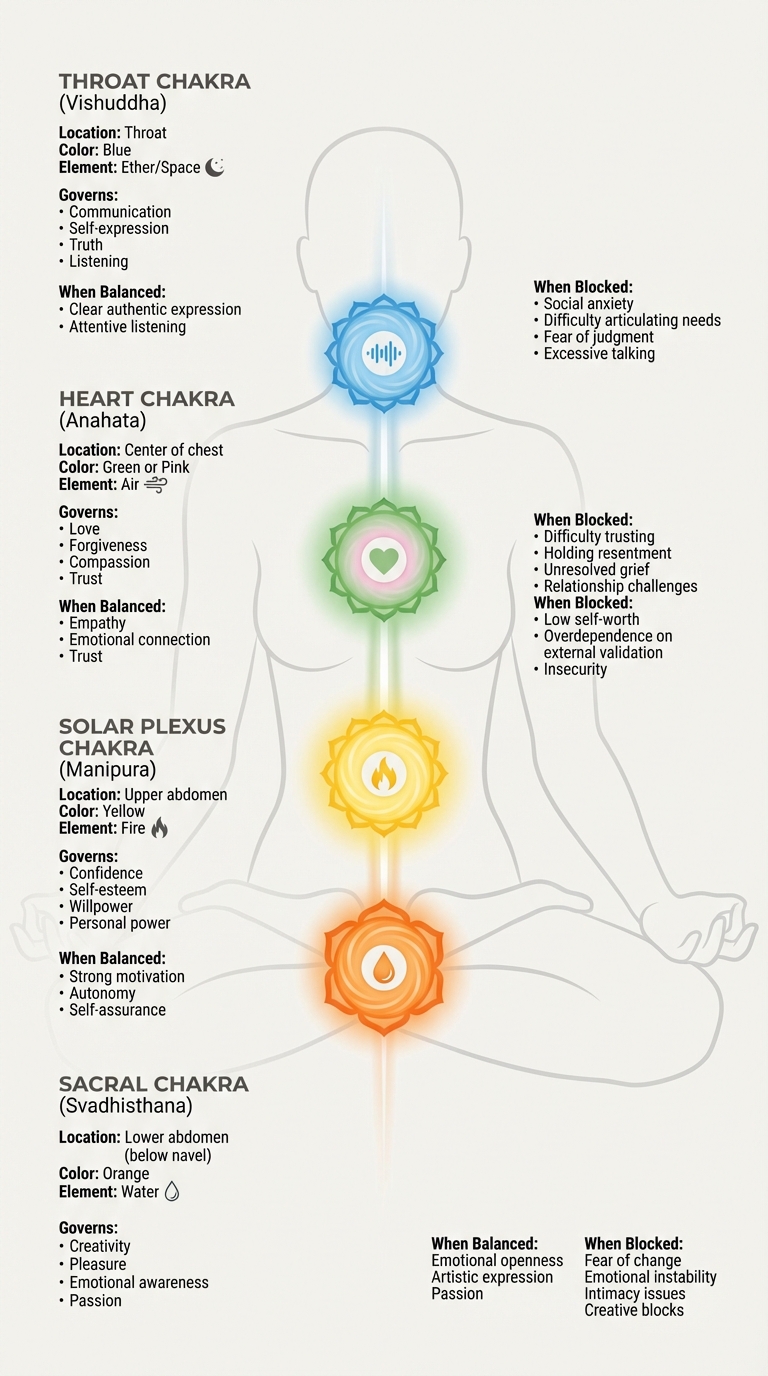
Four Emotional Chakras: Locations, Functions, and Blockage Symptoms Guide
Emotional chakras are believed to be energy centers within the body that shape how you process emotions, connect with others, and express yourself. These centers are thought to play a key role in maintaining emotional balance. When they are open and functioning well, people often report feeling more confident, communicative, and emotionally secure. On the other hand, blockages in these chakras may lead to self-doubt, emotional disconnection, or challenges in expressing feelings.
Four chakras in particular - the Sacral, Solar Plexus, Heart, and Throat chakras - are often associated with emotional well-being. Each one governs a specific aspect of your emotional life, such as creativity, confidence, love, and communication. Practitioners suggest that unresolved trauma, lingering negative emotions, or limiting beliefs can create "stagnant energy", which may lead to feelings of anxiety, insecurity, or frustration. Below, let’s take a closer look at how each of these chakras impacts your emotional health.
"By understanding each one, you gain personal power and self-knowledge that's integrated into your soul."
- Caroline Myss, Medical Intuitive
Sacral Chakra: Creativity and Emotional Flow
The Sacral Chakra, or Svadhisthana, is located in the lower abdomen and is often seen as the center of creativity, pleasure, and emotional awareness. A balanced Sacral Chakra is linked to feelings of passion, emotional openness, and artistic expression. However, blockages in this area are often tied to fears of change, emotional instability, or unresolved past experiences that influence intimacy. These blockages can lead to creative blocks or discomfort with emotional closeness. The water element associated with this chakra highlights the importance of maintaining free-flowing energy.
Solar Plexus Chakra: Confidence and Personal Power
Positioned in the upper abdomen, the Solar Plexus Chakra, or Manipura, is considered the hub of confidence, self-esteem, and willpower. When this chakra is in harmony, it fosters a strong sense of motivation, autonomy, and self-assurance. However, blockages - often linked to experiences like bullying or feeling undervalued - can lead to low self-worth or an overdependence on external validation. The fire element tied to this chakra represents the inner strength and determination that fuels personal empowerment.
Heart Chakra: Love and Compassion
The Heart Chakra, or Anahata, is located in the center of the chest and is often described as the link between the physical and spiritual aspects of the self. It governs your ability to love, forgive, and show compassion. When open, this chakra encourages trust, empathy, and emotional connection with both yourself and others. Blockages, often caused by unresolved grief or prolonged stress, can make it harder to trust people or let go of resentment, impacting your ability to form meaningful relationships.
Throat Chakra: Self-Expression and Communication
The Throat Chakra, or Vishuddha, is situated at the throat and is believed to influence how you communicate and express your truth. A balanced Throat Chakra allows for clear, authentic self-expression and attentive listening. When blocked, often due to low confidence or fear of judgment, it can result in social anxiety or difficulty articulating your needs. In some cases, individuals may overcompensate by talking excessively as they work through these challenges.
How Guided Meditations Heal Emotional Chakras
Guided meditations blend three key techniques - visualization, breathwork, and affirmations - to help clear energy blockages and bring balance to your emotional chakras. These sessions provide step-by-step guidance, typically starting at the base of the spine and moving upward to the crown of the head. This method ensures that energy flows freely throughout your system, promoting a more harmonious state of being.
Each technique plays its part: visualization focuses mental energy on each chakra, breathwork moves life force (prana) through them, and affirmations solidify positive emotional states. Together, they turn stagnant energy into a dynamic, revitalized flow.
Clearing Negative Energy Through Visualization
Visualization is a central practice in chakra healing. During guided meditations, you’re encouraged to imagine each chakra as a vivid symbol along your spine. For example, the Heart Chakra might appear as a glowing green or soft pink light in the center of your chest.
"Visualize each chakra as a brightly colored wheel or flower spinning with energy. Start at the root chakra and work your way up to the crown chakra, picturing the colors becoming brighter and the spinning smoother as you focus your attention on each." - Calm Editorial Team
This practice involves imagining the light growing brighter with each inhale or the spinning motion becoming smoother as you concentrate. Visualization helps pinpoint areas where energy feels stuck or dim. Some people begin by imagining roots extending from their spine into the earth, a grounding exercise that offers stability before engaging with higher chakras. To enhance focus, you can use a candle flame as a physical anchor for your attention.
Breathing Techniques to Activate Chakra Energy
Breathwork, or Pranayama, is the main tool for moving energy through the chakras. Deep, steady breathing calms the nervous system and sharpens your awareness of subtle energy shifts. Swati Dalvi, a Certified Chakra Healing Expert at MyYogaTeacher, emphasizes its role:
"Having control over the breath helps one move inwards, creating more space for them to listen to their energy centers."
By inhaling, you draw in fresh, revitalizing energy, and by exhaling, you release tension, fatigue, or heavy emotions. If a particular chakra feels blocked - like the Heart Chakra - you can direct your breath to that specific area (such as the center of your chest) to encourage energy flow. Starting with 5–10 minutes of simple breath observation helps quiet your mind before moving into more focused techniques.
One effective method is the "exhale release" technique: visualize negative energy leaving your body with each exhale and imagine vibrant light filling the space with each inhale. This rhythmic cleansing works through the chakras sequentially, from root to crown.
Using Affirmations to Build Emotional Resilience
Affirmations act as mental anchors, reinforcing positive emotional states. When you repeat phrases like "I am strong, confident, and capable" while visualizing yellow light at your Solar Plexus, you address emotions like self-doubt or insecurity that may block that chakra. Repetition helps shift negative patterns into constructive energy.
Each chakra benefits from affirmations tailored to its emotional focus. For example:
- Sacral Chakra: "I honor my emotions and creativity" encourages emotional flow.
- Throat Chakra: "I speak my truth with clarity and kindness" supports self-expression.
- Heart Chakra: "I am open to giving and receiving love" fosters compassion and trust.
Consistency is key. Short, daily sessions are more effective for maintaining balance than occasional, lengthy practices. When used alongside visualization and breathwork, affirmations create a comprehensive system that addresses emotional imbalances on multiple levels - mental, energetic, and physical.
sbb-itb-cb05739
Step-by-Step Guided Meditation for Emotional Chakra Healing
Preparing Your Space and Setting Intentions
Find a quiet spot where you can dedicate 20–30 minutes without interruptions. Wear comfortable, loose-fitting clothes that allow you to breathe and move freely. Whether you choose to sit or lie down, make sure your spine stays straight to maintain the natural alignment of your chakras.
To create a peaceful environment, consider playing gentle meditation music or lighting a candle to focus your attention. If you’re incorporating crystals, select ones that correspond to the chakras you’re working on - such as carnelian or sunstone for the sacral chakra (orange), rose quartz or aventurine for the heart chakra (green or pink), and turquoise or lapis lazuli for the throat chakra (blue). Be sure to cleanse your crystals before use and place them near their respective chakra points. For high-quality, ethically sourced crystals and spiritual tools, you might want to explore Conscious Items (https://consciousitems.com).
Next, set your intentions with affirmations tailored to each chakra. For example, say, “I am passionate and emotionally open” for the sacral chakra or “I am loving and lovable” for the heart chakra. You can also include mantras like “Vam” for the sacral, “Ram” for the solar plexus, “Yam” for the heart, and “Ham” for the throat chakra to connect with each energy center. Start by taking deep, steady breaths, letting go of tension with every exhale until you feel fully relaxed.
Guided Visualization for Chakra Healing
Begin by focusing on your sacral chakra, located just below your navel. Picture a warm, orange spinning wheel in this area. As you inhale, imagine the orange color becoming brighter and the wheel spinning more smoothly. With each exhale, visualize any stuck energy or negative emotions releasing from your body. If you’re using a crystal like carnelian, envision its light blending with your energy to help clear emotional blockages.
Shift your attention upward to the solar plexus chakra, just above your navel. Picture a glowing yellow light spinning here, dissolving self-doubt and building a sense of confidence. Then, move to the heart chakra in the center of your chest. Visualize a soft green or pink light expanding with every breath, filling you with love and compassion. Finally, focus on the throat chakra at your neck. Imagine a soothing blue light spinning gently, supporting honest communication and self-expression.
As you continue, let your breath guide the flow of energy upward, moving from the base of your spine through each chakra until it reaches the crown of your head. Picture every energy center being cleansed and balanced along the way. Allow any emotions that surface to flow naturally, knowing they’re part of your healing process. With your chakras now fully activated, begin to transition toward closing your meditation.
Closing the Meditation with Gratitude and Reflection
After completing the visualization, gradually bring yourself back to the present moment. Take a few deep breaths and start moving your fingers and toes to reconnect with your surroundings. Place a hand over your heart and ask yourself, “What energy do I want to carry with me today?” Choose a word like peace, joy, or strength, and repeat it three times to solidify your post-meditation intention.
Take a moment to thank yourself for investing time in your well-being. If you used crystals, express gratitude for their energy and set them aside to cleanse later. Before fully concluding, sit quietly and notice how you feel compared to when you began. Keeping a journal nearby can be helpful for jotting down any emotions, insights, or shifts in energy you experienced during your session. Over time, these reflections can help you track your personal growth and healing journey.
Tips for Beginners and Advanced Practitioners
Building on techniques like visualization, breathwork, and affirmations, these tips can help refine your meditation practice based on your experience level. Whether you're just starting out or looking to deepen your connection, these suggestions can guide you through a more effective chakra meditation journey.
Starting Small: Tips for Beginners
If you're new to meditation, start with manageable 20–30 minute sessions to establish a routine. Struggling to focus with your eyes closed? Try gazing at a candle flame instead. For added concentration, gently touch the area of the chakra you're focusing on - like below the navel for the sacral chakra. Visualizing the associated chakra colors can also help you stay centered and engaged.
Deepening Your Practice: Advice for Experienced Meditators
For those with more experience, advanced techniques can elevate your practice to a new level.
One option is incorporating crystals into your sessions. Place them directly on the corresponding chakra points while lying down to enhance the energy flow. You might also experiment with crystal elixirs or water infused with crystals to amplify their effects. If you're searching for ethically sourced crystals, consider exploring Conscious Items (https://consciousitems.com).
Another key aspect of advanced practice is embracing emotional discomfort. As Philip Permutt, author of Crystal Chakra Healing, puts it:
"You've avoided awaking this repressed emotion for so long that you probably don't even know you're doing it... and the crystals that you don't like are going to bring it to the surface".
Instead of pushing these emotions aside, lean into them during meditation. Tears or sensations of unease can be signs of releasing deeply buried feelings. To keep your crystals energetically refreshed, cleanse them monthly using moonlight, sunlight, or running water.
Conclusion
Guided meditations remain a powerful approach for emotional chakra healing. By weaving together visualization, breathwork, and affirmations, these practices help clear energy blockages, promote chakra flow, and strengthen emotional resilience. Over time, they can help you feel more grounded, creative, confident, and compassionate in your everyday life.
The key is consistency over intensity. As the Calm Editorial Team explains, "Short sessions each day can be more effective than occasional longer sessions because they're thought to help maintain a consistent flow of energy through your chakras, and support ongoing balance and wellbeing". Pay attention to changes in your confidence, creativity, or ability to communicate clearly - these are signs that your practice is making a difference.
To deepen your experience, you might explore additional tools like crystals, essential oils, or mantras tailored to each chakra. For ethically sourced crystals, you can check out Conscious Items (https://consciousitems.com). Whether you're just starting or have been practicing for years, remember to sit with a straight spine and work upward from the Root chakra to encourage a smooth energy flow.
Start with a simple guided meditation today, and let steady, intentional practice bring emotional harmony in the weeks and months ahead.
FAQs
How do I know which emotional chakra is blocked?
You can spot a blocked emotional chakra by observing certain physical, emotional, or psychological signs. Since each chakra influences different areas of well-being, the symptoms of imbalance will vary based on the affected chakra. Look out for recurring issues or discomforts that match the characteristics associated with each chakra.
How often should I do guided chakra meditations to feel results?
Practicing guided chakra meditations regularly - whether daily or a few times a week - can help you balance and heal your energy centers. The key to seeing results lies in consistency over time.
What should I do if strong emotions come up during meditation?
If you experience intense emotions during meditation, try to recognize them without judgment and allow yourself to feel them completely. These emotions might signal areas of imbalance in your energy or chakras, which meditation can help address over time. Be patient and treat yourself with kindness. If the feelings become too overwhelming, gently shift your focus back to your breath or use a soothing visualization. You can also explore seeking support from a trusted source if you feel it would help.
