


If you want one simple starting point: match the crystal to the feeling. In this guide, I’d use Rose Quartz for self-love, Rhodonite for old hurt and forgiveness, Lepidolite for anxiety and overwhelm, Smoky Quartz for grounding, and Aquamarine for calm, honest speech.
This article makes one thing clear: chakra crystal work is self-care, not mental health treatment. The practice centers on 5 crystals, 7 chakras, and short rituals like 5–15 minutes of meditation, journaling, wearing the stone, or keeping it near your bed. If emotional stress stays heavy, I’d treat crystal work as support - not care from a licensed professional.
Here’s the whole article in one glance:
- Rose Quartz → heart chakra → self-love, grief, heartbreak
- Rhodonite → heart + root chakras → resentment, anger, forgiveness
- Lepidolite → heart, third eye, crown chakras → anxiety, stress, overload
- Smoky Quartz → root chakra → fear, burnout, feeling unsteady
- Aquamarine → throat chakra → calm talks, clear self-expression
One useful takeaway: the article separates soft heart support from deeper emotional repair. Rose Quartz is more gentle. Rhodonite is more about working through pain. It also separates calm from grounding: Lepidolite helps settle racing thoughts, while Smoky Quartz helps you feel more rooted in your body.
HEART CHAKRA & CRYSTAL HEALING | Chakra Activation & Balancing with Crystals & Gemstones
sbb-itb-cb05739
Quick Comparison
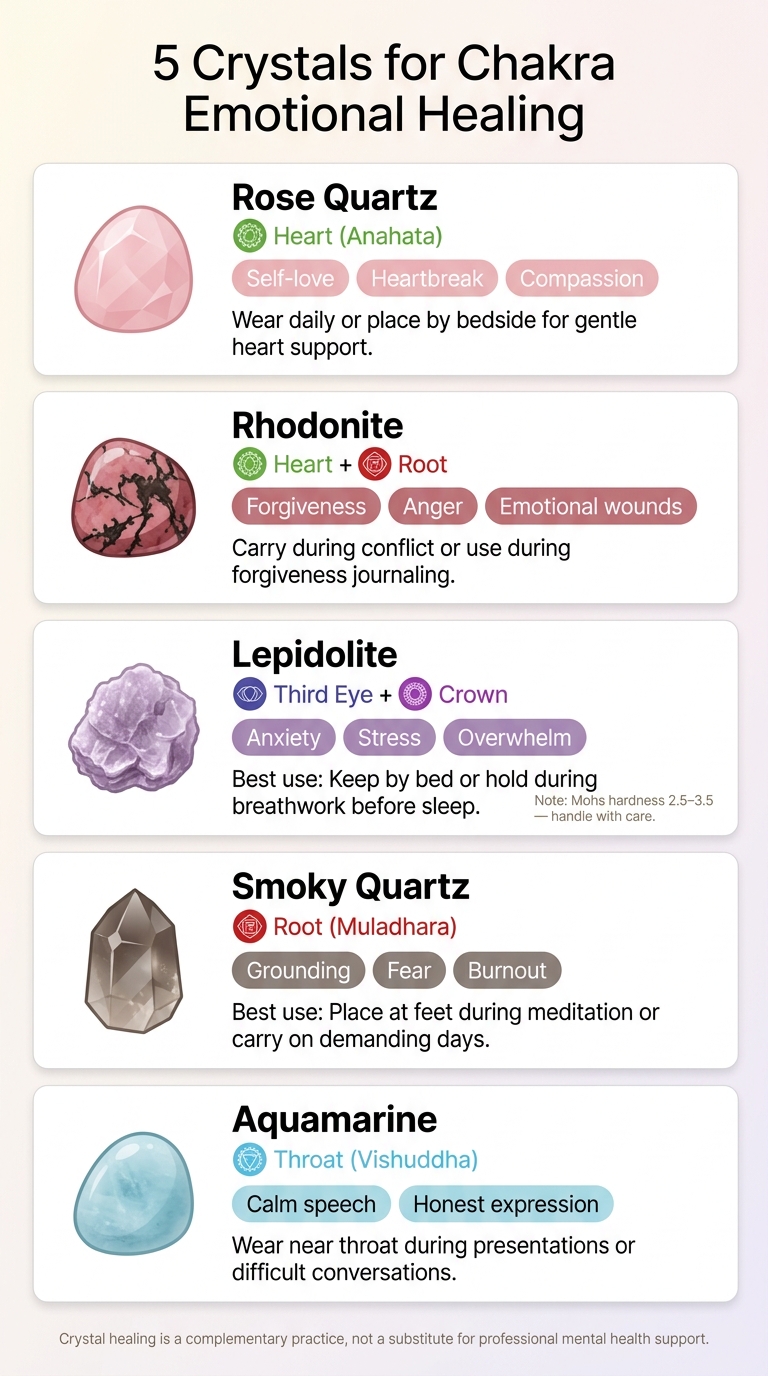
5 Crystals for Chakra Emotional Healing: Quick Reference Guide
| Crystal | Main Chakra | Main Emotional Use | Best Fit |
|---|---|---|---|
| Rose Quartz | Heart | Self-love, compassion, heartbreak | When I want gentle heart support |
| Rhodonite | Heart + Root | Forgiveness, anger, emotional wounds | When I’m working through old pain |
| Lepidolite | Third Eye + Crown | Anxiety, stress, overload | When my mind won’t slow down |
| Smoky Quartz | Root | Grounding, fear, burnout | When I feel scattered or heavy |
| Aquamarine | Throat | Calm speech, honest expression | When I need help saying what I feel |
One fact in the article stands out: Lepidolite ranks just 2.5–3.5 on the Mohs scale, so I’d handle it with more care than harder stones. Other than that, the main message stays simple: pick one crystal, pair it with one daily ritual, and keep the practice easy enough to do most days.
Quick Comparison of the 5 Crystals
Use this table to choose the crystal that lines up with the feeling you want to work on first.
| Crystal | Chakra Association | Emotional Focus | Best Use Case |
|---|---|---|---|
| Rose Quartz | Heart (Anahata) | Self-love, heartbreak healing, compassion | Wear daily as a bracelet or necklace; place by the bedside for steady heart support |
| Rhodonite | Heart (Anahata) + Root (Muladhara) | Forgiveness, releasing anger and resentment, emotional resilience | Carry in a pocket during tense family situations or conflict; use during journaling about forgiveness |
| Lepidolite | Third Eye (Ajna) + Crown (Sahasrara) | Anxiety relief, stress reduction, emotional stabilization | Keep by the bed or hold during evening breathwork to ease overwhelm before sleep |
| Smoky Quartz | Root (Muladhara) | Grounding, releasing fear and emotional burnout, clearing negativity | Place at the feet during meditation; carry during demanding workdays or long commutes |
| Aquamarine | Throat (Vishuddha) | Calm communication, calming nerves in social settings, honest self-expression | Wear as a pendant near the throat during presentations, meetings, or difficult conversations |
A couple of fast distinctions can make the choice easier. Rose Quartz is a better fit for everyday self-love and gentle heart care. Rhodonite leans more toward deeper pain, anger, forgiveness, or betrayal.
For grounding, Smoky Quartz is in its own lane here because it’s the only root chakra stone in this group. People often turn to it when moods feel heavy or stress starts piling up during hard stretches. Lepidolite, by contrast, is more about quieting racing thoughts and easing overwhelm than helping the body feel rooted.
Next, each crystal gets a closer look, starting with Rose Quartz.
1. Rose Quartz
Chakra Association
Rose Quartz is linked with the Heart Chakra (Anahata), the center of love, compassion, and emotional openness.
Emotional Focus
Turn to Rose Quartz for heartbreak, grief, loneliness, resentment, and self-criticism. Its soft, comforting energy is one big reason it’s often the first stone people reach for when they want help with heart healing.
How to Use It
Rose Quartz is a good place to start if you want more self-compassion and a gentler path into heart healing. You can wear it near your heart, keep it by your bed, or hold it during 5–10 minutes of breathwork or journaling.
During breathwork, picture a pink glow moving from the stone into your chest. You can pair that with an affirmation like I am loving and lovable or My heart is safe to heal.
Crystal healing is a complementary practice, not a substitute for professional support.
If you want a deeper emotional release, the next stone shifts from soft comfort into tougher healing work.
2. Rhodonite
Chakra Association
Rhodonite is most often linked to the Heart Chakra (Anahata). In crystal work, people use it for compassion, forgiveness, and emotional balance. Some practices also connect it to the Root Chakra, which is where its grounding side comes in.
Emotional Focus
Rose Quartz tends to feel soft and comforting. Rhodonite goes a bit deeper.
This stone is often used when someone is trying to work through old hurt instead of just soothing it for the moment. Because of its heart-centered energy, Rhodonite is tied to forgiveness, self-compassion, and emotional repair. People commonly turn to it when dealing with resentment, grief, anger, or betrayal. It’s also used to help you stay calm and steady during conflict.
Put simply, Rhodonite is best for processing past pain, easing resentment, and restoring balance after emotional hurt.
How to Use It
Place Rhodonite on your chest during meditation and breathe out tension. Wear it as a bracelet or necklace for steady support. You can also hold it during a forgiveness practice while repeating an affirmation such as I release what hurt me and make room for compassion.
Next, Lepidolite shifts the focus from heart healing to calming stress and overwhelm.
3. Lepidolite
Chakra Association
Lepidolite connects with the Heart, Third Eye, and Crown chakras, which is why many people turn to it for emotional balance and a quieter mind.
Emotional Focus
People often use Lepidolite during periods of anxiety, mood swings, or emotional overload, especially when life feels like it’s shifting under their feet. It’s also linked with letting go of old emotional habits that no longer help.
That’s why Lepidolite is sometimes called the stone of transition. The name fits its role in crystal work: helping people move through change with a little more steadiness.
Why It Fits
Lepidolite is known for being rich in lithium, and that fact shapes much of its reputation in crystal work. That said, its use here is symbolic, not medical.
How to Use It
You can place Lepidolite on your chest, forehead, or crown during meditation, depending on where you want to put your attention. If stress spikes in the middle of the day, hold a tumbled stone and take three slow breaths. Simple, but sometimes that small pause is exactly what helps.
For sleep, keep it by your bed or under your pillow to help settle your thoughts before bed. Since Lepidolite is a soft mineral - 2.5–3.5 on the Mohs scale - tumbled stones or jewelry tend to work best for daily use.
If you need more grounding than calm, Smoky Quartz is the next fit.
4. Smoky Quartz
Chakra Association
Smoky Quartz is a go-to stone for grounding when fear, stress, or insecurity starts to pile up. It’s most closely tied to the Root Chakra, which relates to safety, stability, and feeling anchored. In day-to-day use, that makes Smoky Quartz a solid pick when emotional overload leaves you feeling scattered.
Emotional Focus
People often use it for stress, fear, worry, and that heavy emotional weight that can be hard to shake. It’s known for helping move dense, unsettled energy into a steadier state. Sometimes that’s the first step - you need to feel stable before calm can even begin to show up.
Why It Fits
Smoky Quartz has a steady, grounded feel, which is why many people reach for it when they want emotional support with a strong sense of stability.
How to Use It
Hold Smoky Quartz near your feet during meditation and visualize roots sinking into the earth while repeating: "I am safe. I am secure. I am grounded."
On high-stress days, carry a tumbled stone in your pocket or keep one on your desk or by the front door as a grounding anchor.
Pair it with Lepidolite when you want grounding plus extra calm. If your stress feels more like racing thoughts than physical tension, Lepidolite is the next stone to try.
5. Aquamarine
Chakra Association
Aquamarine is tied to the Throat Chakra (Vishuddha). This chakra relates to clear speech and honest self-expression. It can also help heartfelt feelings move to the throat with less friction.
Emotional Focus
Reach for Aquamarine when your emotions feel stuck, especially when saying them out loud feels hard. It can also help bring a sense of calm before difficult conversations, presentations, or periods of change. In simple terms, it’s a good stone when feelings need to turn into words.
How to Use It
Place Aquamarine on your throat during meditation. As you do, picture a blue light at your throat that supports clear expression. You can also wear it near the throat for steady support during conversations. If you’re getting ready for a difficult conversation or a presentation, hold the stone beforehand to settle your voice and thoughts.
Once you know which crystal fits your emotional need, the next step is using it consistently.
How to Use Crystals for Emotional Support
Once you’ve chosen a crystal, put it into one simple daily ritual. Match the stone to the emotion and chakra you picked above, then keep things easy: choose one method and stick with it.
Meditation is one of the easiest ways to use these stones. Hold the crystal in your hand or place it on the chakra you want to support, then breathe slowly for 5–15 minutes.
Journaling with a crystal nearby can give your writing a clear point of focus. Set the stone next to you while you write about the feeling you’re working through. It turns journaling into a more focused check-in instead of a loose brain dump.
For day-to-day support, wearing crystal jewelry is one of the most practical choices. A bracelet, necklace, or ring keeps the ritual close without adding extra work to your day. Conscious Items offers crystal bracelets and necklaces made with genuine gemstones and ethically sourced materials.
Your nightstand can be part of the ritual too. Keep lepidolite or smoky quartz by your bed, then hold it for a few slow breaths before sleep.
One honest note: crystals are complementary tools for calm and self-reflection, not replacements for professional mental health support. Their value often comes from the ritual itself: pausing, breathing, and giving your attention to one thing. That steady rhythm can make the practice easier to keep up with.
Conclusion
After looking at the five stones above, the choice comes down to the feeling you want to support. Rose Quartz, Rhodonite, Lepidolite, Smoky Quartz, and Aquamarine each speak to a different emotional need: self-compassion, forgiveness, calm, grounding, and honest expression.
Start with the crystal that fits what you need right now.
Once you’ve picked one, keep things simple. Use crystals as part of a broader self-care practice. They can support you, but they’re not a substitute for professional mental health care.
Simple often works best. What matters most is staying consistent, not making the practice complicated. Healing rarely moves in a straight line. Go slowly, and let the crystal be a steady reminder of your intention.
FAQs
How do I choose my first crystal?
Choosing your first crystal is a personal thing. Many people believe the stone often chooses you, not the other way around.
So pay attention to what pulls you in. If you keep coming back to the same crystal, that may be a sign it matches what your energy needs most.
You can also pick a crystal based on its qualities. For example, Rose Quartz is often linked to self-love, while Amethyst is known for mental clarity.
If you're just starting out, one crystal is often enough. It keeps things simple and helps you build a steady connection with it.
Can I use more than one crystal together?
Yes, you can use multiple crystals together to support different chakras or your overall energy work. When you pair stones with energies that work well side by side, the effect can feel more layered and help support emotional balance.
If you're new to this, start small with two or three stones and pay attention to how you feel. Notice any shifts in your mood, focus, or sense of calm. It also helps to pick crystals that complement each other so the experience feels more balanced, not all over the place.
How often should I use chakra crystals?
Use chakra crystals in whatever way fits your life. There’s no fixed schedule. You can work them into your daily routine, wear them as jewelry, or bring them into meditation.
If you have a specific goal in mind, using them steadily for 2 to 4 weeks may help you notice the effects. Go with your intuition, and cleanse your crystals on a regular basis, usually once a month.
